The History of Lothen
Brother of Gods (10 BC)
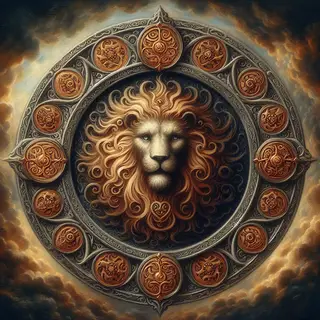
Vheod Whiteshield, dubbed the Brother of Gods, earned his name even before the end of the Great War. Leading the Mountain Tribes, which eventually became the first Lothenians, he rallied Human forces and forged an alliance with the God Knights. Honored by the Gods’ presence, Vheod gained renown by defeating a legendary lion using only with an almond-shaped, white shield. This feat led the Mountain Tribes to follow him in the First Quest of the Great War, showcasing his leadership and prowess on the battlefield.
Of Gods & Men (9 BC)
In a solemn gathering before his people, Vheod Whiteshield pledged his army to the Knight Gods, Justar, Arkallis, and Solisis, for the decisive confrontation against Nedel the Hunter. As a gesture of goodwill, King Vheod offered the Gods the healing waters of his lands, and the divine waters miraculously healed the wounds inflicted upon them in the war against Nedel. This generous act solidified the blessing of the Gods upon King Vheod and the people of Lothen, forging a sacred alliance that would shape their destiny in the unfolding events of the epic conflict.
The First Quest (7 BC)
Embarking on the First Quest, the Three God Knights and the armies of Lothen, under the leadership of King Vheod Whiteshield and first general Odarion Whiteshield, journeyed on the Western Road to confront Nedel near the great Crater. Amid the mountains of Armorgrand, they encountered the Goddesses Mora and Shyrune, who offered shelter, safe passage, and guidance for their northern route. Months later, the united armies engaged in a brutal battle against Nedel, joining forces with several armies from Central Vitallia. This devastating conflict unfolded on multiple fronts, with the most intense clashes occurring in a location later known as Dead Gods Lane. The scale and ferocity of the battle marked it as the most impactful and destructive in the history of the world.
The War of the Fork (200 AC)
Lothenian armies aggressively extend their influence to the east, securing territories along the banks of the Fork River. The Lion army encounters minimal resistance, gradually assimilating the kingdoms of Igros, Sol, and Sarta into its dominion. This strategic expansion enhances Lothen’s territorial control and strengthens its presence in the eastern regions. Over the next few years, the Lion Army came to be composed of troops from all the vassal states of the Forklands.
Lothen’s Expansion (208 AC)
The initial two hundred and fifty years of the new age witnessed a dynamic period of expansion. Throngs of people migrated in various directions, and the kingdom of Lothen experienced substantial growth both industrially and in population. Boasting the most organized and well-equipped army in Central Vitallia, Lothen extended its influence to the southern islands, ventured northward into the territories of Monsters, and expanded eastward by establishing the Forkland Kingdoms as vassal states. In 208 AC, Adam Whiteshield, the king of Lothen, earned the title of king of the Four Great Kingdoms as subsidiary states pledged their fealty to him.
The War of the Mask (363 AC)
In 363 AC, Queen Aryan Whiteshield declared war on Dragoria, igniting what would become known as the War of the Mask. The conflict unfolded across the rugged mountain ranges that divided the two kingdoms. Among Lothen’s vassal states, Sarta offered the most active support in the campaign. Lothenian forces succeeded in driving the Dragorians back to their fortified cities, but the Lion Army failed to breach the cliff-hewn strongholds of Dragoria, leading to a prolonged and grueling war. Dragoria received aid from the Freelanders, who feared the growing influence of Lothen. Weakened by the harsh Dragorian climate and the weariness of her troops, Queen Aryan was eventually forced to retreat to the Forklands.
The Plague of Lothen (396 AC)
In 396 AC, the kingdom of Lothen was devastated by a plague that killed thousands of people. A party of explorers under the command of the Queen’s son, prince Valam Whiteshield, traveled east to the Dead Gods Lane in search of the White Elixir, after the consultation of Akreyn Thiaspis. Within that search party, Iliandor Irion, a mercenary, saved the young prince from the demon Vandero. The party returned successful after a while.
Istario’s Reign (559 AC)
In 559 AC, Istario Whiteshield became famous for his war mongering, after a number of civil wars and conflicts within the kingdom of Lothen. Istario earned the reputation of a mad ruler who executed his commanders for minor violations with a distinctively violent way. Crucifixions of lords and skinning of living prisoners who he thought to be traitors of the sacred blood of the Whiteshield family, took place frequently.
The Red Hunt (600 AC)
In 600 AC, Istario led the Lion Army west in a conflict known as The Red Hunt, aiming to dominate the barbaric tribes of Armorgrand, particularly the Brutgors. However, the Lion Army suffered a devastating defeat in the Battle of Mountain Skull in 602 AC. Istario succumbed to a rare affliction two years later, with his demise linked to the shamanic magic of the Brutgors.
The Red Lion of Lothen (820 AC)
In 820 AC, under the reign of Eldaria Whiteshield, a civil war broke out in Lothen, that used as its core, a number of powerful families that endorsed the expansion of the Lion to the West as supporters of Istario’s vision. Cities like Nalia, Enar, Saria and later Liria, flew the sigil of the Red Lion and attempted to usurp the Queen. The battles peaked with thousands of victims, finally arriving outside the walls of Bladefall during The Siege of the Red Lion. Leader of that movement was the usurper Karthas Criden.
The Great Shadow (830 AC)
In 830 AC, Akreyn Thiaspis convinced the Queen to merge the Crown with a vampire movement for the better protection of the city and the restoration of peace. The movement was approved and was named Sevayl or The Great Shadow. A powerful family of vampires took over command of the country and worked together with the royal forces in order to eliminate the rebellion of the Red Lion. When Karthas Criden was arrested and executed, his death in combination with the reputation of the Great Shadow, caused a chain of reactions throughout the land, dividing it into supporters of the movement that were called Acolytes and enemies of the vampires that were called Untouched.
Norionor’s Call (992 AC)
In 992 AC, Norionor Whiteshield, driven by a vision to elevate Lothen to unmatched glory, set out to forge the greatest realm the world had seen since the Great War. Though the kingdoms of Sol, Sarta, and Igros already stood as vassals under Lothen’s crown, Norionor rallied their might with promises of new lands in regions yet to be conquered. His true purpose was far greater: to prepare Vitallia for the prophesied return of Nedel, known as The Hunter. Under his banner, the largest army ever assembled in Central Vitallia marched forth, not merely to expand a kingdom, but to shape the destiny of a continent.
The March of the Lion (1001 AC)
In 1001 AC, the army of Norionor Whiteshield of Lothen began the March of the Lion and swiftly conquered the kingdoms of Armorgrand, the Freelands and even Rose, the kingdom of magic. Every victory bred a new title for the king of men. The Blood of the First Knights, The Lion of the South, Naranor, the Divine Man. He called his soldiers Naranors, believing that they ascended into something greater than the rest of the races of Vitallia. Norionor always kept in his company Akreyn Thiaspis as his primary advisor and consultant throughout the campaign.
The Battle of Eastrose (1003 AC)
In 1003 AC, during his great campaign, Norionor Whiteshield led an attack on the kingdom of Rose. A strange event connected to the Sentinel caused all magic in the region to stop working, leaving Rose defenseless. With no way to protect her kingdom, the Queen of Rose was forced to surrender and send her armies to support Norionor’s cause. After Norionor’s sudden death, Rose quickly regained its independence. However, the invasion left a lasting impact. As part of the surrender, Rose signed the Treaty of Thorns, an agreement that let them remain independent but tied them to Lothen through military and trade promises. The city of Alerber, where much of the conflict took place, was renamed Liongate in memory of Norionor’s campaign. Today, the name still stands, though many in Rose speak it with mixed feelings. The treaty holds, but quiet tension between the two kingdoms remains.
The Battle of Swordbridge (1003 AC)
In 1003 AC, after three years of unmatched victories, Norionor, King of Lothen, fell in the Battle of the Swordbridge during a legendary duel against the creature known as Element. In the days leading up to his death, signs of physical and mental decline had become apparent, strange behavior, bouts of sorrow, and growing madness shadowed his final days. A year later, his body was returned to Bladefall. There, he was mourned as a savior and celebrated as a messianic figure. Festivals were held across the kingdom, and songs praised the young king who had dared to reshape the world. But once the mourning ended, a darker reality settled over Lothen. None of the promised rewards ever reached the vassal lords. The lands meant to be granted to Sol, Sarta, and Igros remained unconquered. The Freelanders reclaimed their independence. Rose too regained its freedom, though bound to Lothen through the still-standing Treaty of Thorns, a reluctant bond that the southern Freelands never agreed to. What followed was a period of deep unrest. Civil discontent spread through the realm as the cost of Norionor’s ambition became clear. Thousands of soldiers had died in the campaign, leaving many families grieving and many provinces weakened. The vassal states, bled dry by war and left with nothing to show for their sacrifices, grew resentful. With the dream of a united realm in ruins and no heir strong enough to take his place, Lothen entered a troubled era, haunted by the glory of Norionor and the hollow silence he left behind.
Magic Prohibition (1110 AC)
In 1110 AC, Luther Whiteshield endorsed a law that forbade the use of magic within the kingdom of Lothen, with the exception of members of the royal army and selected individuals. Many magic users were crucified at the king’s command and others, fled to the mountains of Armorgrand, Dragoria and to the Trident Empire in order to survive.
Treaty of the Root (1204 AC)
In 1204 AC, King Meleborn Whiteshield of Lothen formally lifted the long-standing restrictions on magic and sought to make amends for the damage caused during the era of the Runik Movement, a dark chapter in history marked by the persecution and suppression of magic-users across the continent. Decades earlier, during the height of the prohibition, the Kingdom of Rose came under heavy assault by the Brutgors of Armoria, a barbaric people from the southern mountains. In desperation, the Rosian crown invoked the Treaty of Thorns, appealing to Lothen for military aid. However, the Lothenian court, still deeply entrenched in anti-magic policy, refused to intervene unless Rose agreed to adopt the same laws and purge its magical institutions. Rose stood its ground and rejected the demand.
The result was years of brutal raids and destruction along Rose’s borders. With its magical defenses crippled and no help from its supposed ally, the kingdom suffered greatly. King Meleborn, inheriting the throne in a time of reflection and transition, acknowledged these failures. As an act of reconciliation and renewed diplomacy, he signed the Treaty of the Root, strengthening the fragile bond once established by the Treaty of Thorns. Unlike previous accords, this treaty was not about dominance or submission, it was about healing.
Under its terms, Lothen sent seven thousand men and women, not as soldiers, but as builders, healers, scholars, and protectors, tasked with rebuilding damaged cities, restoring arcane institutions, and protecting vulnerable border regions. Many among them were families of former exiles or magic-users seeking new beginnings. To mark the turning of an age, Meleborn issued The Apology of the Lion, a royal decree that promised lands, titles, and protection to all magic-users willing to settle in Lothen and aid in its magical revival. His dedication to restoring the dignity of the arcane earned him the name Meleborn the Admirer. The Treaty of the Root became a cornerstone of peaceful relations between Rose and Lothen, binding the two kingdoms more closely, not through conquest or force, but through shared rebuilding, reparation, and respect for magic.
The Threat of Edunkas (1400 AC)
The looming threat of Edunkas, a colossal spider, casts a shadow over Lothen. The creature approaches the city of Enis, instigating fear. In response, the Blade Guardians intervene to repel the colossal spider, forcing it to retreat to its lair.
The Pure Lion of Lothen (1480 AC)
In 1480 AC, under the reign of Destin Whiteshield of Lothen, the movement of the Pure Lion was created and supported by the king and certain powerful families. The movement wanted the banishment of the vampires from the kingdom and the cancellation of their authority regarding political and military matters. King Destin supported the idea and became known as Destin the Pure. He sent Akreyn Thiaspis away and ordered the crucifixion of all the vampires of Lothen. The movement found great support from the common people, and massive inner conflicts occurred, in a time filled with assassinations, attacks and highly increased crime. Large numbers of people fled the capital and the kingdom during the next years. The movement ceased to exist along with the end of Destin Whiteshield’s reign in 1520 AC.
Lothen’s Daughter (1986 AC)
In 1986 AC, King Vheod Whiteshield V answered the call of Goualekir, the eastern realm under divine threat, and prepared Lothen for the long-foretold return of Nedel the Hunter. Bladefall, believed to be one of the Four Chosen Cities in ancient prophecy, was bound by fate to take part in the coming war. Thus began the formation of the Army of the Daughter, a united force drawn from across the Forkland vassal states. King Vheod summoned the full might of the Lion Army, but Sarta refused the call. The Sartans claimed their blood had been spilled too often for Lothen’s wars, and they would not bleed again for a prophecy born in the East. This refusal sparked a rebellion. However, with the threat of Nedel’s return looming large, King Vheod could not divide his forces. Pressed by the greater danger beyond the horizon, he chose to march eastward and delay dealing with the uprising. Sarta seized the opportunity, declared autonomy, and severed its formal ties to the Forklands. Despite Lothen’s later attempts to reassert control, Sarta remained free, thanks to a covert alliance with the South Freelanders. Smugglers and riders carried arms and supplies through Dragoria’s passes into Sartian hands, in exchange for the promise of a shared frontier free from Forkland influence. Over time, Sarta’s autonomy hardened into a reality that even Lothen’s court begrudgingly acknowledged, though tensions simmered beneath the surface. By the time the War of the Daughters began in 1990 AC, the cracks in the Forklands had already begun to show. And when Lothen turned its eyes west again, it would be toward a defiant Sarta, no longer just a rebellious vassal, but a kingdom in its own right.
The Four Daughters (1990 AC)
The God Nedel spearheads an assault against the united Daughters/Cities of Vitallia, resulting in the 2nd Siege of Goualekir. The conflict culminates in the Battle of the Four Daughters, a pivotal moment in Vitallia’s history, rivaling even the significance of the Great War of the Gods. The resolute defense succeeds in repelling Nedel’s attack, banishing his essence from Vitallia and securing a crucial victory for the united forces.
Teyn
Most powerful kingdom of the Forklands, home of Vheod Whiteshield and the Gods of the Final Light.