
Dwarven Anvil Descriptions
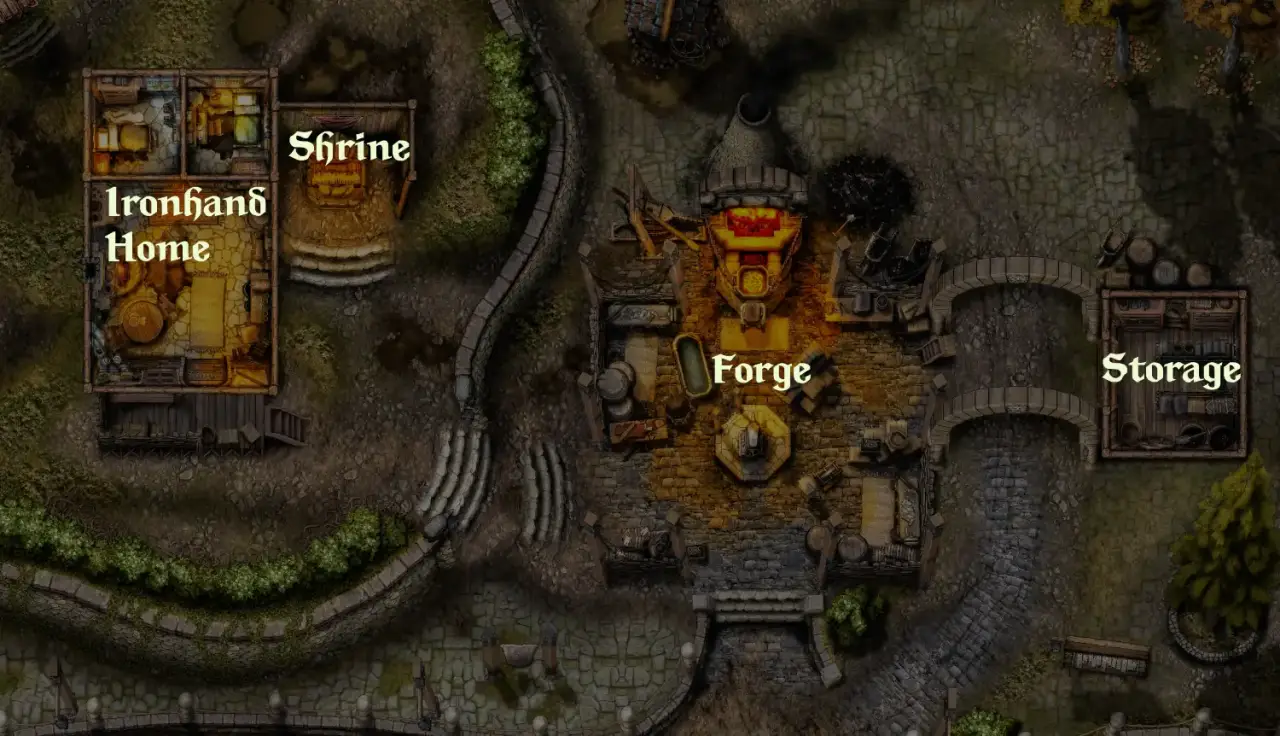
Ironhand Home
A modest stone home rests beside the forge, built with the same care and purpose. Inside, a single room serves as kitchen and living space, warmed by a broad hearth. The space is neat, efficient—nothing unnecessary.
Two small bedrooms lie beyond. In one, a small desk holds a well-kept ledger, its pages neatly ordered.
The main room holds a few well-kept tools, including a finely crafted dwarven hammer—one of Mafera’s prized possessions, used only for her finest work.
In Mafera’s bedroom, a small desk contains the forge ledger:
Records commissions, repairs, and clients
Lists names, dates, and item types
Often notes unusual materials or special requests
The ledger is a valuable source of information:
Who recently commissioned weapons or armor
Unusual or secretive clients
Patterns of activity (bulk orders, repeated visits, etc.)
With time, players can trace leads here—tying the forge to local events, factions, or emerging threats.
Shrine
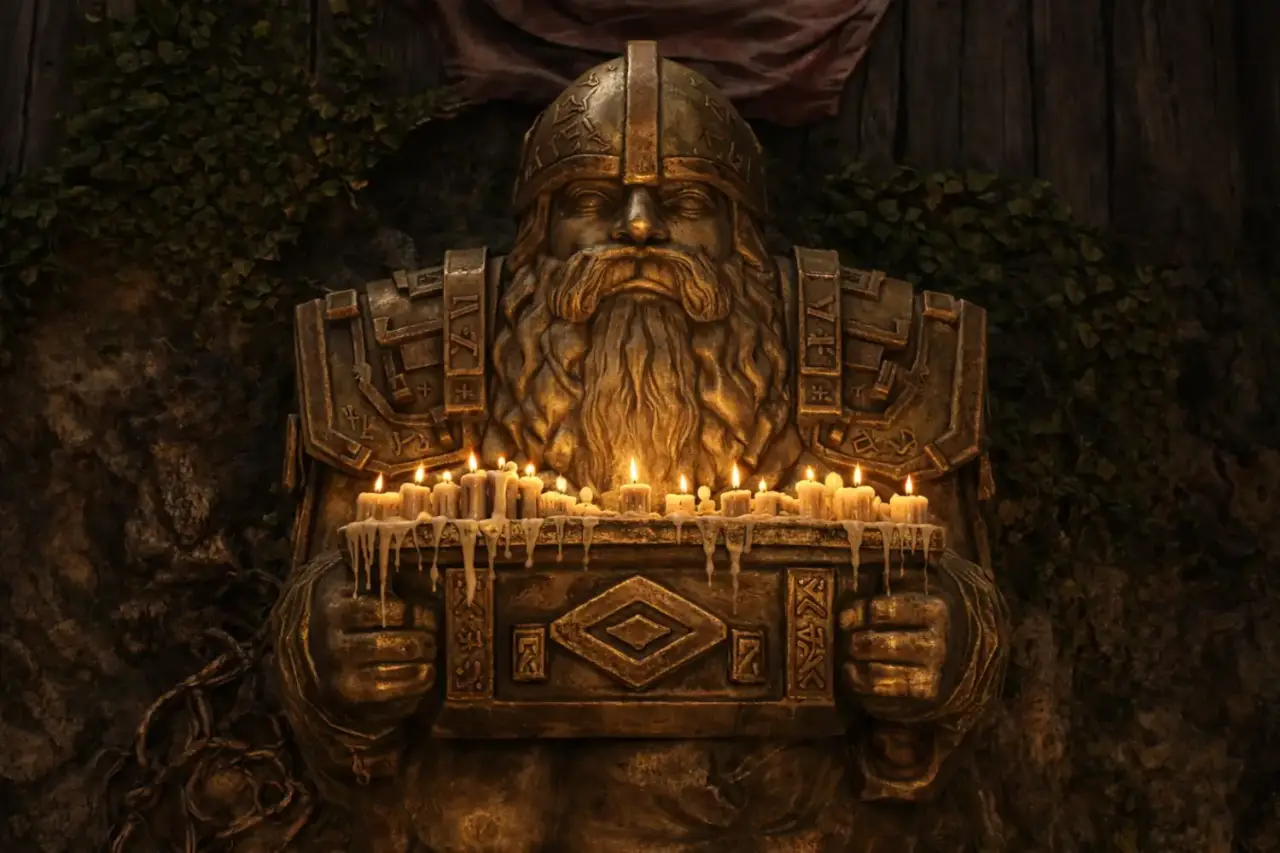
Beneath the eaves rests a small dwarven shrine, its bronze surface darkened by soot and age. A stern, bearded figure is carved into it, hands set firm around a stone altar lined with melted candles. Wax has pooled and hardened in thick layers, as if offerings have come and gone over many years.
The air here is warmer—quiet, still. The shrine feels worn, but not abandoned.
Dwarven characters may feel a quiet pull toward the shrine.
Lighting a candle and offering a prayer grants the blessing.
Shrine of Moradin — Blessing of the Forge
A character with dwarven blood or one devoted to Moradin who lights a candle and offers a quiet prayer at the shrine gains a blessing.
The character gains advantage on one Strength or Constitution ability check or saving throw of their choice.
This must be declared before the roll is made.
A character may receive this blessing only once per month.
Forge
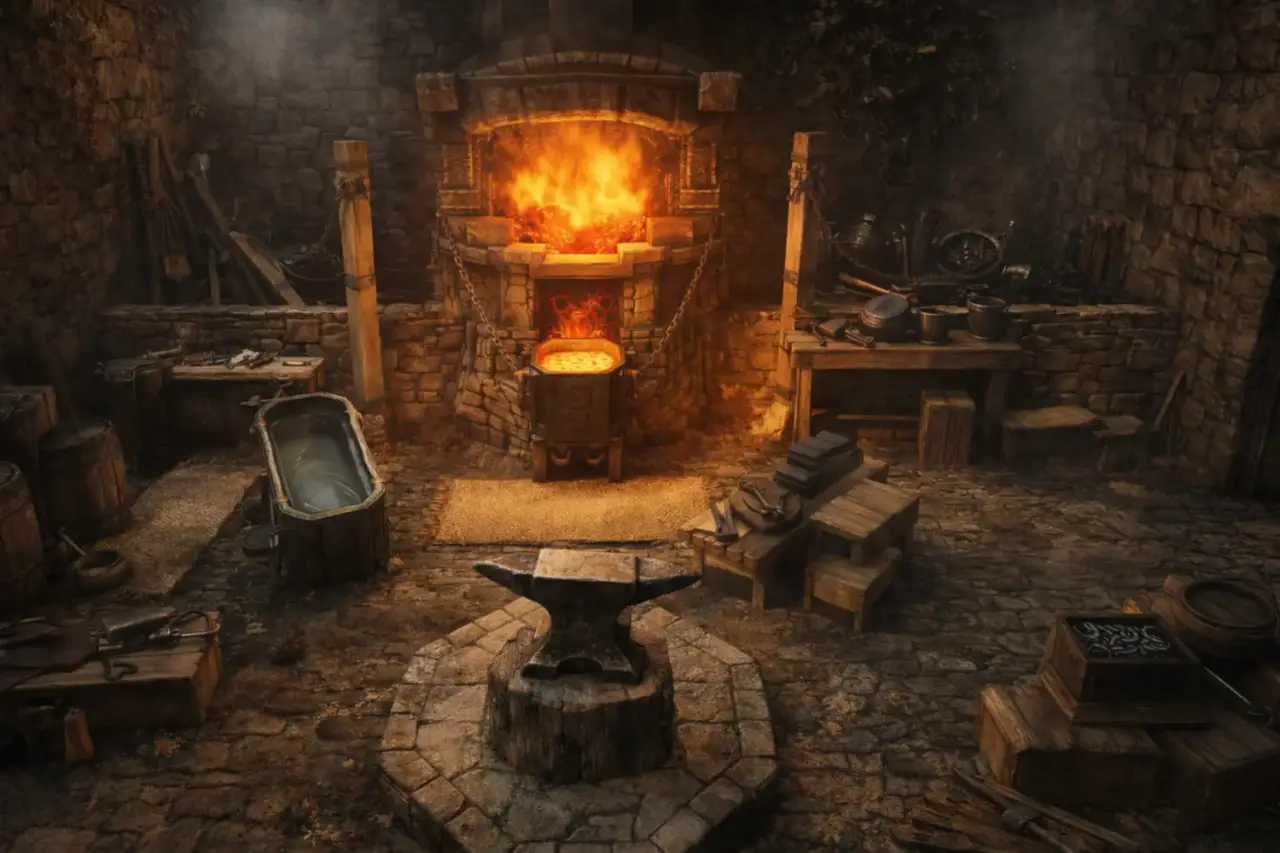
Heat rolls out from the forge in steady waves. A great stone furnace burns bright at the far wall, its fire roaring as iron glows within. Tools and half-finished work rest in careful order across the space—everything worn, but well-kept.
At the center stands a heavy anvil set into a stone base. Its dark surface is etched with faint dwarven runes, worn smooth by years of use. The air is thick with ash, heat, and the steady rhythm of work.
During the day, Mafera or Jasker are present, along with one assistant (a halfling or human). The forge is rarely unattended.
The dwarven anvil is exceptionally dense, far heavier than it should be, and clearly centuries old.
The runes along its side are ancient dwarven script. A character who can read Dwarvish may attempt to decipher them with a DC 12 check.
A character who examines the anvil and succeeds on a DC 18 Arcana check recognizes a latent magical quality:
When used by a skilled smith, items forged upon it have a small chance (1-in-20) to gain a +1 bonus
This property is subtle and tied to both the anvil and the craft of the smith
Dwarven Runes (Translation)
“Stone remembers.
Fire awakens.
Iron yields.
The mountain endures.
What is forged here, endures.”
Storage
A small wooden building stands beside the forge, its door secured with a sturdy lock. Inside, shelves line the walls, stacked with tools, bundles of wood, and neatly sorted bars of iron, copper, and other metals.
Everything is ordered and well-kept.
The storage room contains typical equipment for a working forge and blacksmith.
Items include, but are not limited to:
Hammers, tongs, chisels, and shovels
Rope, pulleys, and hauling gear
Bars and ingots of iron, copper, and tin
Coal, charcoal, and fuel for the forge
Standard utility gear is also kept here:
Ladder, poles, lanterns, and basic repair equipment
Everything is neatly organized and well-maintained, reflecting Mafera’s discipline and care.