
Owners
Mafera Ironhand
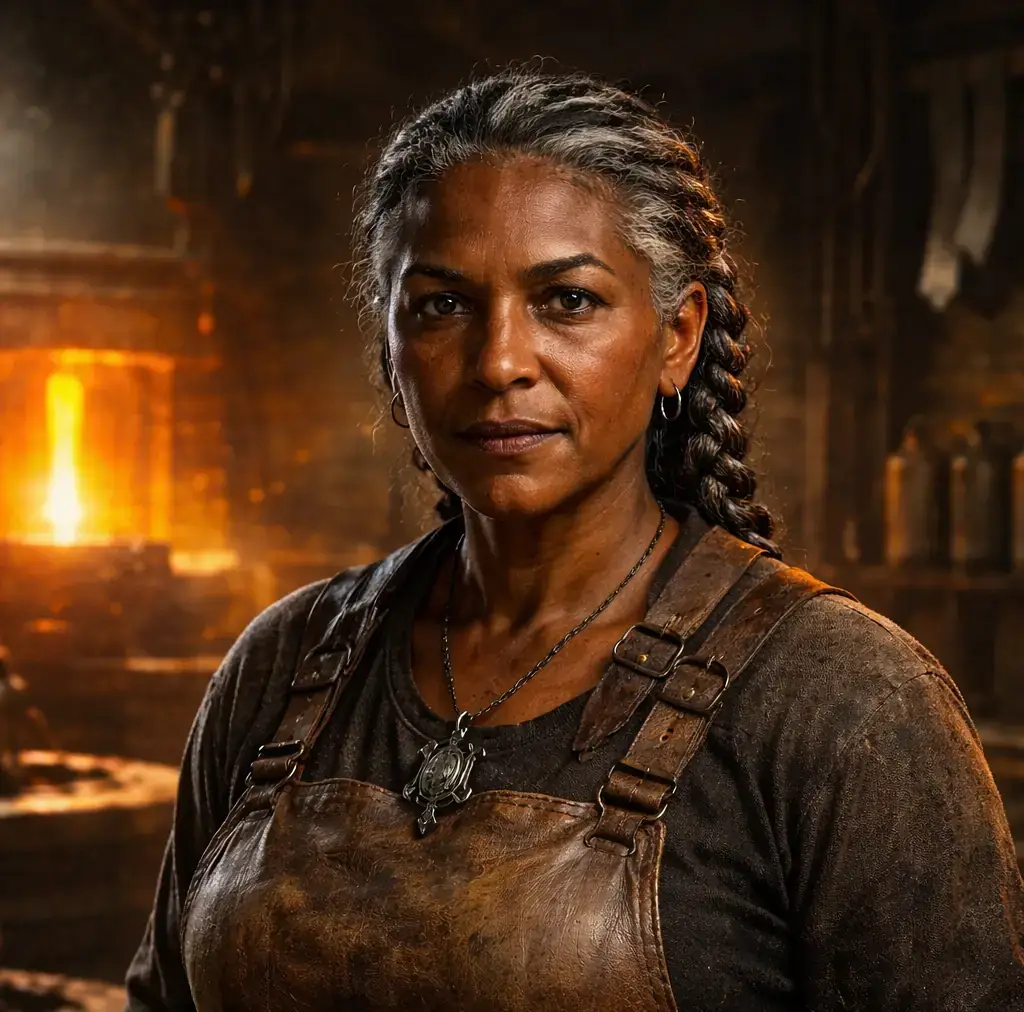
Master of the Dwarven Anvil
Role: Master Smith of Saltmarsh
Faction: Conflicted, she allies with the Dwarves (Loyalist), but also the towns people (traditionalist\) Prior to the dwarves arrivbing she was a staunch traditionalist.
Race: Female Human
Alignment: Lawful Good
NPC Type: Commoner (Skilled Artisan)
Appearance
Broad-shouldered and strong despite her age, with dark skin marked by old burns and calluses earned through decades at the forge. Her hair is tightly braided and streaked with gray, kept out of the way of flame and sparks.
She wears a heavy leather apron over simple work clothes, tools always within reach. Around her neck hangs a small, worn symbol of Moradin, darkened with soot.
She is focused, attentive, and has a commanding presence.
At the Table
Speaks plainly, without ornament
Respects skill and effort above all else
Rarely wastes time on small talk
Judges others by their work, not their words
Shows quiet warmth to those who prove themselves
Mafera works best as a grounded, immovable presence—calm, capable, and quietly authoritative.
Overview
Mafera was not born to dwarven tradition, but she was raised within it.
Taken in as an orphan by a dwarf of the Tor Mountains, she was taught smithing as discipline, learning the rhythm of the forge and the reverence owed to creation.
When he died, he left her his anvil and a shrine to Moradin.
With these, she came to Saltmarsh.
There, she built a life, marrying a carpenter, raising a son, and establishing a forge now central to the town. Since her husband’s passing, she has carried it on, with her son Jasker at her side.
The anvil is unmistakably dwarven, old, heavy, and quietly remarkable. Work shaped upon it is known for its strength, though Mafera claims no magic.
She maintains the shrine as best she can. Some rites have been lost.
With the arrival of dwarven miners, her forge has drawn attention. Some see her as rightful. Others do not.
Mafera does not argue.
She works.
Hooks / Use
Can craft durable weapons, tools, and armor of exceptional quality
May take on custom commissions requiring rare materials
Offers practical insight into dwarven forging traditions
Can repair damaged gear or rework old equipment into something new
A potential ally or focal point in disputes with dwarven factions
Secret
The anvil and shrine were given together as part of a dwarven rite of inheritance, one not meant for outsiders
The rite may have been incomplete or altered, leaving its legitimacy uncertain
The shrine anchors the anvil’s subtle power; if neglected or removed, its blessing may fade
Mafera does not speak of this.
Whether she fully understands it… is unclear.
Jasker Ironhand
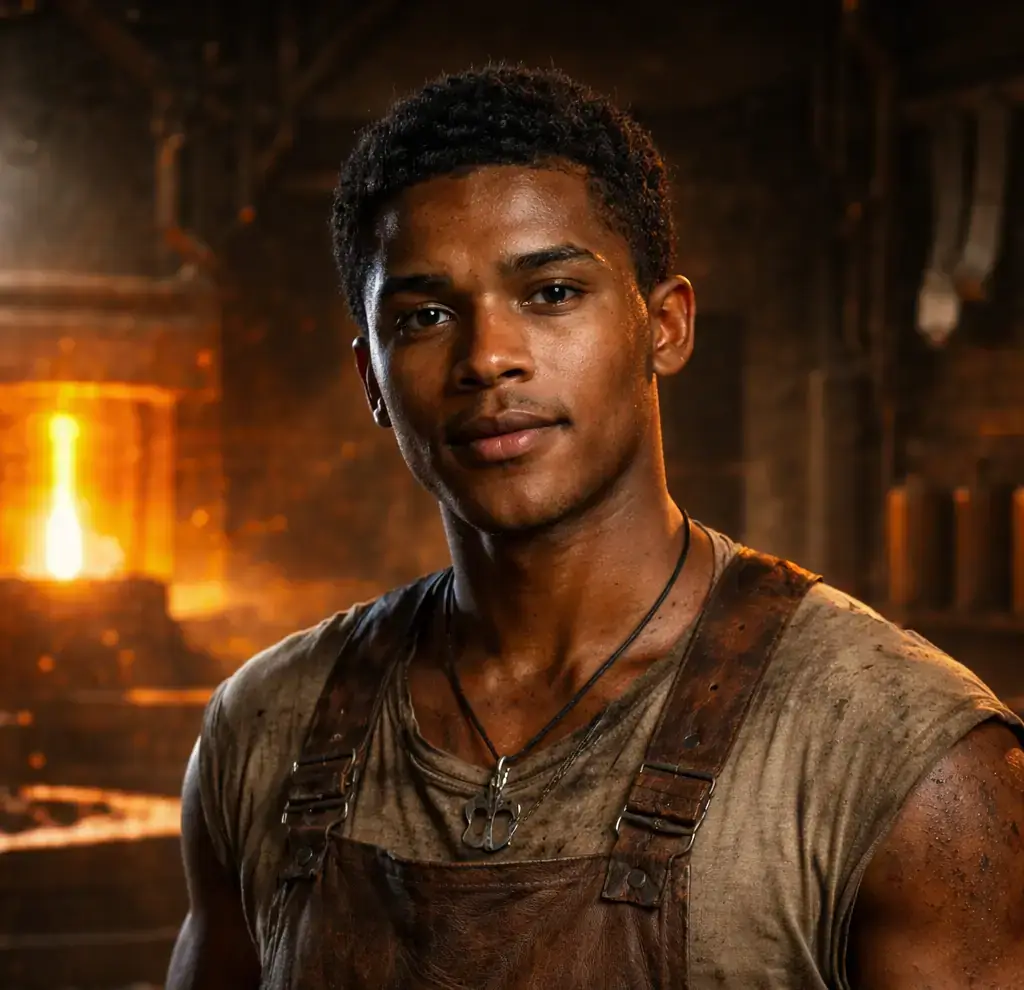
Journeyman of the Dwarven Anvil
Role: Blacksmith’s Journeyman
Faction: remains a traditionalist.
Race: Human
Alignment: Lawful Good
NPC Type: Commoner (5e, skilled artisan)
Appearance
Broad-shouldered and strong from years at the forge, with dark skin marked by faint burns and calloused hands. His hair is kept short for practicality, and a constant sheen of soot clings to his arms and clothes no matter how often he washes.
He wears a well-used leather apron. Around his neck hangs a small, simple symbol of Moradin, less ornate than his mother’s but clearly worn with respect.
His expression is steady and focused, though there’s still a trace of youth in the way he watches others work, always learning.
At the Table
Speaks plainly and honestly
Takes pride in his work—quick to defend its quality
Defers to his mother without hesitation
Warms quickly to those who respect craft and effort
Becomes guarded if questioned about the anvil or its origins
Jasker works best as a grounded, dependable presence—the steady rhythm of the forge made human.
Overview
Jasker is Mafera’s son, raised in the heat and rhythm of the Dwarven Anvil. His father, a carpenter, died only a few years ago, leaving Jasker to fully commit to the forge and support his mother.
Though human, Jasker was raised on dwarven principles; discipline, patience, and respect for craft. Mafera’s stories of her adoptive dwarven father shaped much of his worldview, and he quietly reveres those traditions even if he has never seen the halls they came from.
He is skilled for his age, already trusted with finishing work and taking on commissions, but he knows he is not yet a master. That awareness keeps him humble.
Jasker supports the dwarven mining operation without hesitation. To him, they are not outsiders—they are kin of a kind, tied to his family through tradition and respect.
Still, he feels the tension their arrival brings. Where Mafera stands firm, Jasker watches and listens aware that not all dwarves will see things as clearly.
Hooks / Use
Can craft or repair basic gear quickly—especially tools, nails, hooks, and practical items
Knows local gossip from customers passing through the forge
May ask the party about dwarven lands, ruins, or lost smithing techniques
Could accompany the party short-term to retrieve rare metals or salvage
Acts as a bridge between townsfolk and dwarven miners
Secret
Jasker worries he will never live up to either his mother—or the unseen dwarven master who taught her
He has begun quietly experimenting with the anvil, trying to understand its deeper properties… but has not told Mafera
Once—just once—he swears something he forged held an edge longer than it should have
He doesn’t know if it was skill… or something in the anvil itself.