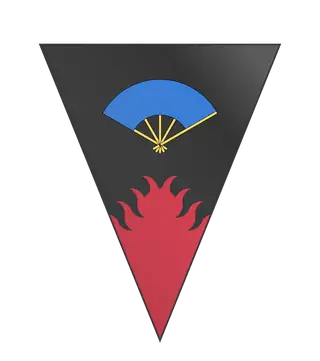
The Peoples of Lóngyuán
The Empire of Lóngyuán is one of the oldest continuous civilisations in Naplica, its origins stretching back to the earliest age of empire. Founded by the Zhuyang said to have been shaped in the image of Hēiyào, Lóngyuán was once the earthly dominion of the Dragon God himself.
Though the age of divine rule has long since passed, the legacy of that era continues to define its people. From imperial courts to mountain villages, Lóngyuán remains a land shaped by hierarchy, tradition, and the enduring weight of its past.
While unified under imperial authority, the peoples of Lóngyuán are regionally diverse, reflecting the vast territories once held under the Dragon’s shadow.
The Lóngrén:
The dominant culture of the empire, centred in its ancient heartlands. The Lóngrén are the direct inheritors of Lóngyuán’s imperial legacy, builders of its cities, architects of its bureaucracy, and once the chosen people of Hēiyào. Their society is structured, disciplined, and deeply rooted in tradition, with strong emphasis on order, hierarchy, and scholarship. Even after the renunciation of the Dragon God, their identity remains tied to the idea of empire and continuity.
The Asaharu:
Once winged servants of the Zhuyang, some Asaharu now live as grounded people spread throughout the empire. Though no longer enslaved in name, their historical role as messengers, soldiers, and administrators still shapes their place in society. They are known for discipline, endurance, and loyalty, though the memory of their fall and their rebellion lingers in cultural consciousness.
The Shukarli:
In the northern mountains around Shukarla, these people have adapted to a harsh, elevated environment. More insular than the imperial core, they are skilled climbers, herders, and guardians of the high passes. Their culture places strong emphasis on community, endurance, and spiritual connection to the mountains, maintaining traditions that predate imperial authority.
The Lhadrin:
Dwelling in the fertile regions around Lhadrong, these people are known for their distinct cultural identity within the empire. Their traditions blend martial heritage with artistic expression, and they maintain strong local customs despite centuries of imperial rule. They are often seen as both loyal subjects and cultural outsiders within Lóngyuán.
Culture and Society:
Lóngyuán is defined by its imperial legacy:
Bureaucratic Tradition: Governance through layered administration and provincial authority.
Cultural Continuity: Strong reverence for history, ancestry, and established order.
Post-Dragon Identity: Official rejection of Hēiyào, though his legacy remains ever-present.
Regional Diversity: Local cultures persist beneath the broader imperial structure.
Cautious Authority: Expansionist ambition has given way to preservation and stability.
Though no longer a divine empire, Lóngyuán still carries itself as one.
Lóngyuán Naming Conventions:
Lóngrén:
Male Names: Li Wei, Zhang Hao, Chen Yu, Wang Jian, Liu Feng, Zhao Ming
Female Names: Lin Xia, Mei Lian, Zhao Yue, Chen Rui, Li Na, Wang Xiu
Family Names: Li, Zhang, Chen, Wang, Liu, Zhao
Asaharu:
Naming often mirrors Lóngrén conventions but may include older titles or identifiers tied to service or lineage.
Shukarli:
Male Names: Tenzin, Dorje, Nima, Pasang, Lhakpa
Female Names: Dawa, Pema, Yangchen, Dolma, Choki
Family names are less rigid, often tied to clan or locality.
Lhadrin:
Male Names: Nongyai, Thoiba, Ibocha, Sanajaoba
Female Names: Thoibi, Linthoingambi, Chanu, Memcha
Family Names: Ningthoujam, Khuman, Moirang, Angom