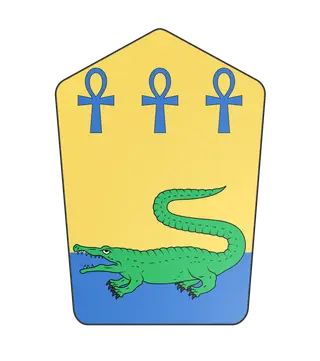
Born of the Black Waters
The civilisation of Bakem was not forged in conquest, but in survival.
Long before the rise of the great powers of Naplica, the lowlands beyond the hills were a vast and untamed marsh, a place of slow waters, choking reeds, and fertile black earth. Early settlers, believed to have come from the northern reaches of Māt Ṣēri and beyond, found refuge there, drawn by the life-giving river 'the Bakem' that cut through the wetlands.
These early peoples were scattered and vulnerable, living in small communities along the riverbanks. Floods brought both destruction and renewal, and it was through generations of hardship that they learned to master the waters, building canals, raising embankments, and shaping the land itself.
From this struggle, the identity of the Khemeti was born: a people of the Black Land, defined by their bond to the river and their ability to endure.
The First Kingdoms
As knowledge of the river grew, so too did the settlements along its banks. Villages became towns, and towns became rival kingdoms, each centred around control of water, land, and labour.
These early kingdoms were often divided—marsh against floodplain, delta against dry edge. Control of irrigation routes and fertile land became the foundation of power, and rulers began to emerge who claimed not only authority over the land but divine favour over the waters themselves.
Temples rose beside the first great canals, and priesthoods formed to interpret the will of the unseen forces that governed flood and drought.
The Unification of Bakem
In time, the division of the riverlands gave way to unity.
A single ruler, remembered in Khemeti tradition as the First King of the Two Lands, brought the rival kingdoms under one crown. Whether through conquest, diplomacy, or divine mandate is debated, but the result was undeniable: the birth of a unified Bakem.
With unification came order.
The river was no longer the domain of competing rulers, but the lifeblood of a single realm. Irrigation networks expanded, agriculture flourished, and the authority of the crown became inseparable from the health of the land itself. The ruler was no longer merely a king, but a divine intermediary, one who maintained balance between the waters, the land, and the people.
This marked the beginning of Bakem as a true civilisation.
Isolation and Endurance
Unlike many of its neighbours, Bakem did not grow through expansion.
The hills that surrounded it, shielding it from the ambitions of powers such as Māt Ṣēri, also confined it. While others waged wars and built empires, Bakem turned inward, refining its systems of governance, agriculture, and belief.
While wars and upheavals reshaped the wider world, Bakem endured largely unchanged. Dynasties rose and fell, but the structure of the state remained constant, rooted in the river, the temples, and the divine authority of its rulers.
Trade did exist, carried cautiously through passes and along distant routes, but it never defined the civilisation. Bakem did not rely on the world beyond; it relied on the river.
The Living Kingdom
Today, Bakem stands as one of the most stable and enduring realms in Naplica.
To outsiders, Bakem is a land untouched by time, its temples ancient, its rulers divine, its people unchanging.
But to the Khemeti, it is a kingdom, sustained by the waters, ordered by tradition, and bound eternally to the Black Land that gave them life.