Names: Lord of Wind
Alignment: True Neutral
Province(s): God of Riding, Horses, and the Wind
Common Symbol: A Horse
Followers: Human

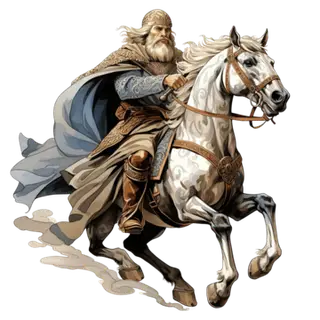
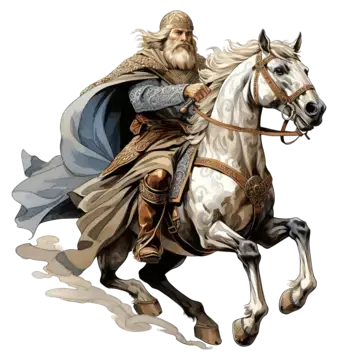
Waian, the Lord of Wind, known as Weyand to the Cathringians and Vaianus to the Auresians. He is the god of riding, horses, and the open sky. He embodies motion without restraint, the rush of air across the plains, the thunder of hooves, and the fleeting freedom that comes with never standing still. Where other gods build halls of stone or law, Waian rides the horizon itself, untethered and ever-moving, a spirit of wind and wanderlust that cannot be bound.
He is most often depicted as a lithe rider cloaked in streaming furs, his form half-lost in the gale, astride a great horse whose mane becomes the wind itself. In some traditions, he appears not as a man at all, but as a storm of dust and motion, within which the shape of a rider can only just be glimpsed. His holy symbol, the Horse, is worn openly by his followers, etched into saddles, branded onto tack, or carried as bone or bronze tokens tied to reins.
Waian’s influence is found in the charge of cavalry, the migration of herds, and the instinct to move on when the land grows stale. He speaks in gusts and sudden silences, valuing speed, instinct, and freedom over caution or permanence. His champions are the “Windriders,” unmatched horsemen who live in the saddle, carrying messages, striking swiftly in war, or vanishing across the plains before any force can answer them.
In myth, Waian was never given a throne, nor did he seek one. When the gods divided the world, he refused all dominion that could be measured or held. Instead, he claimed the space between the road, sky, and steppe, and in doing so became master of all that moves. It is said he was the first to tame the wild horse, not by breaking it, but by racing it until man and beast breathed as one. He dwells in the Rider’s Roost, though no mortal has ever found it twice, for it rides the wind as he does, forever just beyond the horizon.