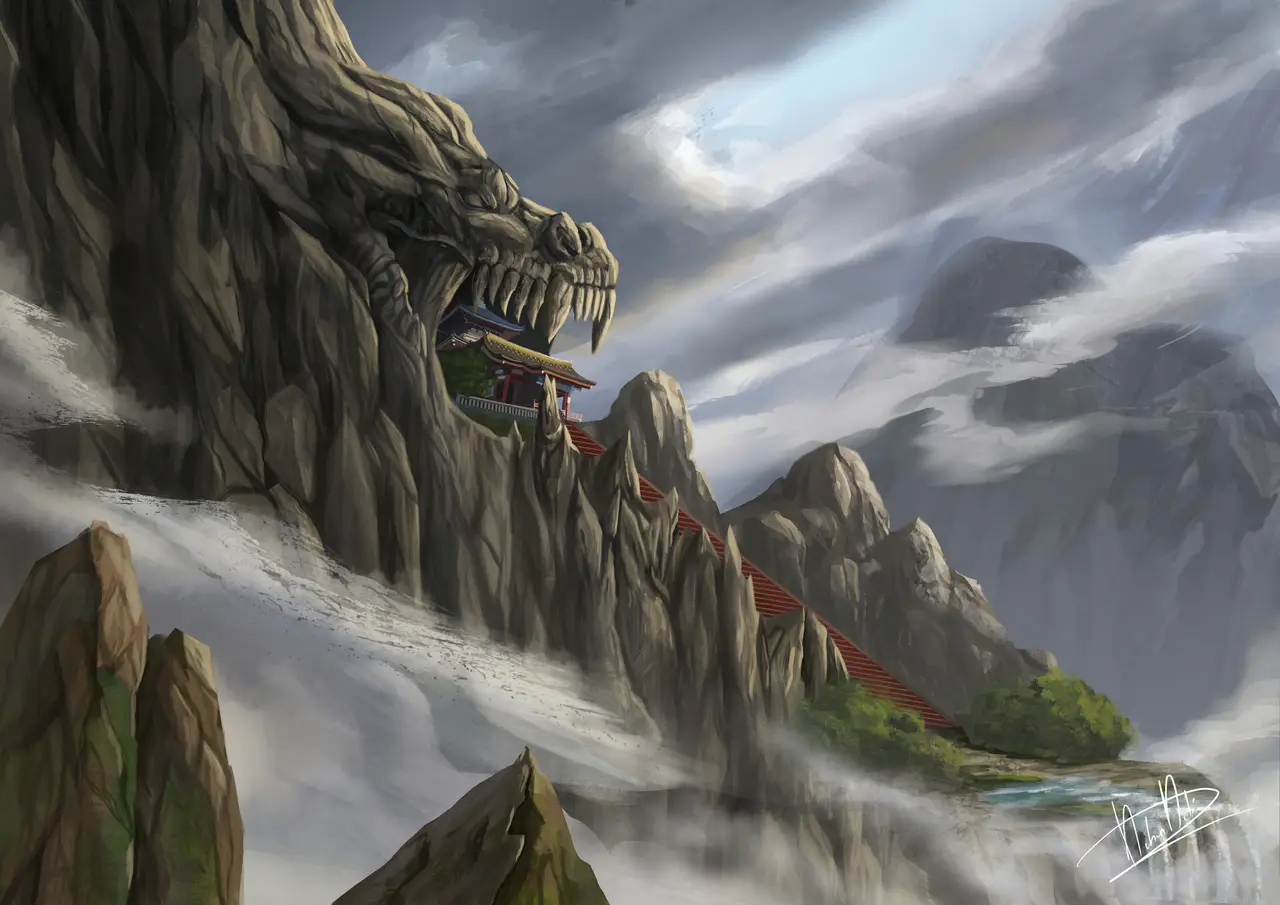
Hēiyàoti is a secretive and often feared religion centred on the worship of Hēiyào, the Dragon God and first disciple of Gǔxuán. Once widespread across the eastern realms of Naplica, the faith now survives primarily in the shadowed temples and hidden cults of Hēishénjiào, though scattered sects still persist in secrecy within the Empire of Lóngyuán.
Unlike most religions of Naplica, which honour broad pantheons or ancestral spirits, Hēiyàoti is fiercely singular in its devotion. Followers believe that Hēiyào alone embodies the rightful order of the world, and that through unwavering loyalty to his will the faithful may participate in the restoration of divine dominion over mortals.
The religion is widely outlawed throughout Naplica. Its reputation for fanaticism, strict hierarchy, and militant zeal has led many kingdoms to suppress its practice entirely. Yet despite persecution, the faith endures—often hidden beneath layers of secrecy, ritual code, and clandestine worship.
At the heart of Hēiyàoti belief lies the conviction that the world must ultimately be brought beneath the authority of Hēiyào, whose chosen servants guide humanity toward a destiny shaped by discipline, devotion, and absolute obedience.
Principal Deity
Hēiyào
Dragon God and First Disciple of Gǔxuán.
Hēiyào is revered as the supreme lord of the Hēiyàoti faith. His followers regard him not merely as a god, but as the living embodiment of divine authority in the mortal world. He is believed to have been chosen directly by Gǔxuán to impose chaos upon creation and to lead the faithful against the forces that resist the rightful structure of the cosmos.
In religious iconography, Hēiyào is depicted as a great celestial dragon. His scales represent the breakable laws of existence, and his breath is said to carry both destruction and renewal.
To his followers, obedience to Hēiyào is the highest virtue. Through loyalty, discipline, and devotion, they believe they best serve the Dragon God.
Other Sacred Figures
Gǔxuán
The primordial master, father of Hēiyào, whom he first served. Though revered, Gǔxuán is often seen as distant and unknowable, with Hēiyào acting as the active divine force within the world.
Practices & Sects
Imperial Orthodoxy – Hēishénjiào
The dominant and openly practiced form of Hēiyàoti within Hēishénjiào, where the religion functions as both faith and state ideology. Temples serve as centres of governance, military training, and spiritual authority.
Hidden Devotees – Lóngyuán
Secret cells that continue the worship of Hēiyào within the Empire of Lóngyuán despite official prohibition. These sects meet in concealed shrines and maintain ancient rites that once flourished openly.
The Black Flame Orders
Fanatical militant groups dedicated to spreading Hēiyào’s dominion across Naplica. Though rarely encountered openly, rumors of their activities have contributed greatly to the religion’s feared reputation.
Beliefs & Philosophy
Absolute Devotion
Followers are expected to show total loyalty to Hēiyào and to the structures of authority that represent his will in the world.
Strength Through Discipline
Personal weakness is viewed as a threat to cosmic balance. Devotees therefore cultivate martial skill, mental discipline, and unwavering resolve.
The Destiny of Dominion
Many adherents believe that the rule of Hēiyào is destined to spread across all of Naplica, restoring what they see as the rightful order of the world.
Status in Naplica
Outside of Hēishénjiào, the worship of Hēiyào is widely banned. Many rulers view the religion as dangerous due to its militant ideology and its history of expansionist movements.
Nevertheless, the faith has proven remarkably resilient. Hidden temples, secret brotherhoods, and wandering preachers ensure that the name of Hēiyào has never fully vanished from the continent.
To some, the religion is a dark relic of an older and more ruthless age.
To its followers, however, it remains the only true path, one that will ultimately reshape the world according to the will of the Dragon God.