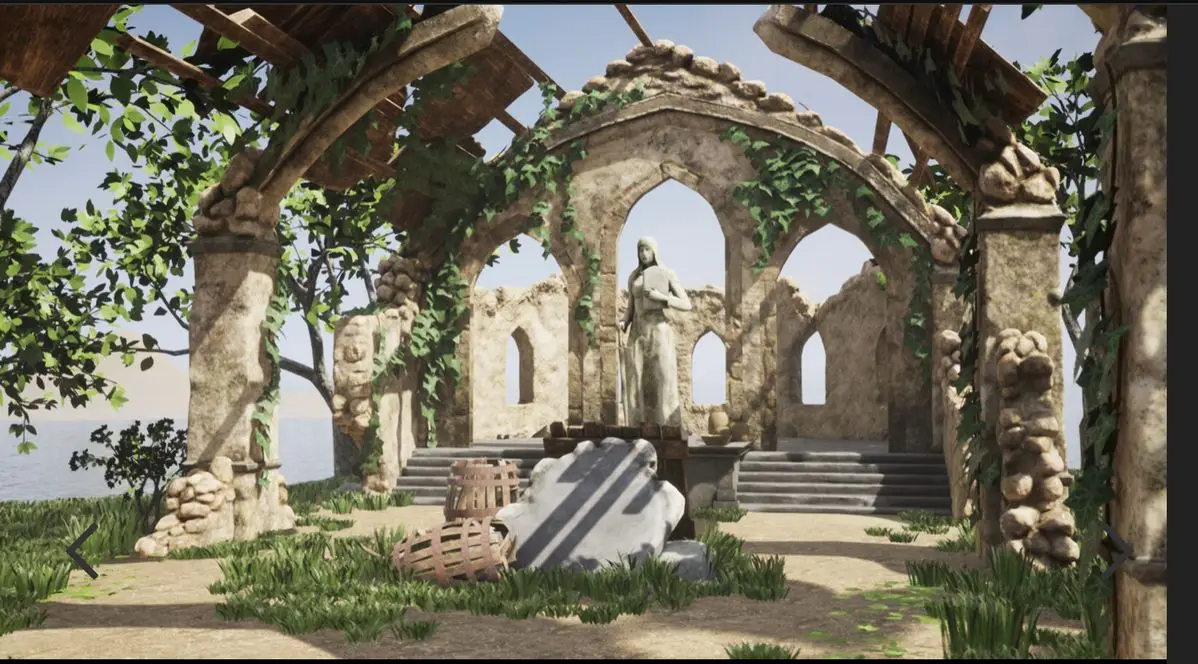
The Lost Beliefs of Silerion
Long before the rise of Clerasy, before the Light was codified into doctrine and empire, there existed a people whose understanding of the Divine Luminary is now all but forgotten.
They are known only as the Silerion.
What survives of their faith is fragmentary, scattered across broken inscriptions, half-deciphered runes, and the oral remnants of a language no longer fully understood even by their descendants. The Silerion themselves retain little more than echoes: a name, a reverence, and a sense that something profound has been lost.
I. The Turning from Calerionfulk
The earliest recoverable traces suggest that the Silerion once belonged to a now-extinct sect of Withic known as the Calerionfulk (its true name lost), adherents of an older, pre-syncretic belief system whose practices are entirely unknown.
At some point in their history, the Silerion abandoned the Calerionfulk.
This abandonment appears neither gradual nor peaceful. Archaeological evidence indicates a sharp cultural break: temples repurposed, older symbols defaced or buried, and new runic inscriptions layered atop the old.
What prompted this rupture is unclear.
The prevailing theory among modern Illuminates is that the Silerion encountered Äälarish worship, specifically the reverence of Enä, and, in witnessing it, came to reinterpret divinity itself.
From this moment of contact, they turned toward a singular presence they named Kleiratas.
II. Kleiratas in the Silerion Mind
Unlike the later Clerasy conception of Clērātas as the Divine Luminary of moral clarity and judgment, the Silerion understanding of Kleiratas is unknowable in full.
Only fragments remain.
The name itself persists, one of the very few words retained in the degraded Silerion tongue. Even now, it is spoken with instinctive reverence, though its meaning cannot be properly translated.
Though the full theology is lost, scholars have identified patterns that resemble early classical belief systems:
Temples appear to have been sites of offering and observance, not merely contemplation
Priestly roles are implied through repeated titles in inscriptions, though their exact function is unclear
Seasonal or celestial alignment of temple structures suggests festival cycles or sacred observances tied to time
Rather than the later emphasis on purity and doctrinal authority, Silerion's devotion to Kleiratas may have centred on maintaining favour, honouring presence, and fulfilling sacred obligation.
In this sense, Kleiratas may have been seen as:
A watchful and present deity, aware of mortal actions
A bestower of fortune or ruin, depending on reverence
A being who required rites to be remembered, not truths to be interpreted
There is no surviving unified myth, but scattered inscriptions suggest stories once existed, now broken beyond reconstruction, depicting Kleiratas in acts of judgment, creation, or revelation.
Unlike Clerasy, which claims clarity through the Light, the Silerion faith may have accepted a more mythic uncertainty, where the divine was known through story, ritual, and tradition rather than codified doctrine.
III. The Silence of Ritual
No intact Silerion ritual survives.
This is not for lack of evidence, but for its incompleteness. The ruins they left behind suggest a once-rich ceremonial tradition, yet every attempt to reconstruct it ends in fragments.
Their temples, still scattered across Poseia, do not resemble the ordered sanctuaries of later Clerasy. Yet neither are they empty.
Within them, scholars have identified clear indications of structured worship:
Raised stone platforms believed to have served as altars or offering sites
Processional pathways, worn smooth by repeated movement
Carved recesses and basins, possibly used for libations, fire rites, or sacred deposits
The architecture itself suggests ritual movement and ceremony. Many temples are designed in such a way that one must follow a deliberate path inward, passing through successive chambers before reaching a central space.
What occurred there is unknown.
The runes that cover the walls, often layered, interrupted, or partially erased, appear to record fragments of:
Invocation formulae
Names or titles of Kleiratas
Possible ritual instructions, though never complete
Unlike Clerasy, which preserves its rites through strict doctrine, the Silerion left no unified record. Each temple differs slightly, as though practice varied by region, priesthood, or era.
Some scholars believe this indicates a living tradition, one that evolved over time rather than being rigidly enforced.
Others argue something more troubling, that the knowledge of these rites was deliberately obscured, either by the Silerion themselves or by those who came after.
IV. The Runed Temples of Poseia
Across the continent, the ruins of Silerion temples endure.
They are often found in remote or geologically significant locations — cliffsides, beneath mountains, or aligned with celestial phenomena. Many were later repurposed by early Clerasy missionaries, though most were ultimately abandoned due to their… disquieting nature.
Common accounts describe:
A persistent sense of being observed
Light behaves unnaturally within their halls
Inscriptions that appear to shift when not directly viewed
Attempts to fully catalogue these sites have repeatedly failed. Runes defy consistent translation, and no two temples appear to follow the same internal logic.
The Church officially classifies them as pre-Clerasy aberrations, though access is tightly controlled.
V. What Remains
Of the Silerion faith, only three certainties endure:
They abandoned the Calerionfulk after encountering Elven worship.
They turned to a presence they called Kleiratas.
They left behind structures and language that resist full understanding.
And yet, the name persists.
Kleiratas.