Complex Skill Checks: A System for Long-Term Tasks
Sometimes, a task isn’t about immediate action but rather long-term effort, persistence, and problem-solving. A Complex Skill Check represents an individual working on a project over hours, days, or even weeks, whether that’s researching forgotten lore, crafting a powerful potion, deciphering ancient texts, or repairing a damaged relic.
How It Works
Set the Goal
The player describes what they are trying to accomplish.
The DM determines the difficulty and how long the project will take.
Success Threshold & Fail Limit
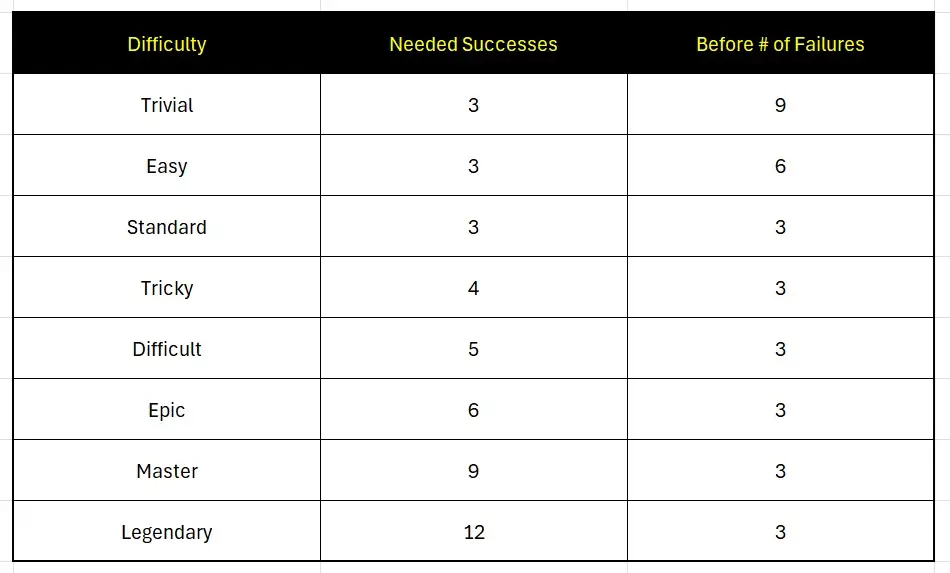
The player must accumulate a set number of successes before reaching a failure limit—just like a Skill Challenge.
Skill Checks Over Time
The player makes one skill check per set interval (hour, day, week, etc., depending on the task).
Each success moves them closer to completion.
Each failure represents a setback—wasted time, wrong conclusions, broken materials, or even unintended consequences.
Setbacks & Partial Success
If the player fails too many times, the project ends in failure, possibly with lost time or resources.
If they succeed but with failures along the way, they might achieve partial success—finishing the project, but with flaws or missing pieces.
If they succeed flawlessly, they gain full benefits, possibly even uncovering extra insights.
Researching a Forgotten Civilization (History, Arcana, or Investigation Check)
A wizard wants to uncover the lost origins of an ancient city. The DM sets the task at Difficult (5 successes before 3 failures), requiring one History, Arcana or Investigation check per day of study.
Successes move the research forward, unlocking key details.
Failures lead to setbacks, such as misleading sources or dead ends.
3 failures before 5 successes? The wizard hits a dead end, and must seek another method or expert help.
Partial success? They learn some facts but miss key details, leading to incomplete or flawed conclusions.