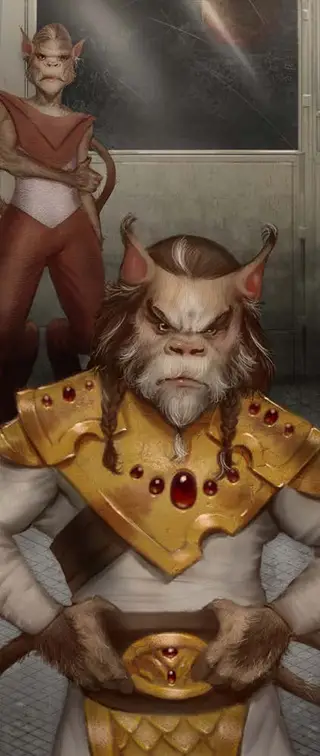
The Aslan are the youngest of the great powers, an expansionist species of feuding clans and predatory warriors, eager to seize all the universe has to offer. Aslan are descended from four-limbed carnivorous pouncer stock, which was originally near the top of the food chain in the forests of their homeworld, Kusyu. True to their pouncer ancestry, Aslan are capable of short bursts of speed somewhat greater than that manageable by humans. They also have slightly superior hearing and night vision. Otherwise, they are one of the most human-like of all alien species, excepting, of course, the Vargr (who are, after all, genetically-altered mammalian stock originally from Earth).
Early Terran explorers regarded the Aslan as ‘lionlike’ and the simile has stuck ever since, although the Aslan bear only a passing resemblance to terrestrial lions. Nonetheless, this early misnomer has influenced a great deal of human thinking about the Aslan, including terminology (the use of pride to translate ahriy, for instance) and ascribed behaviour – which is not at all leonine.
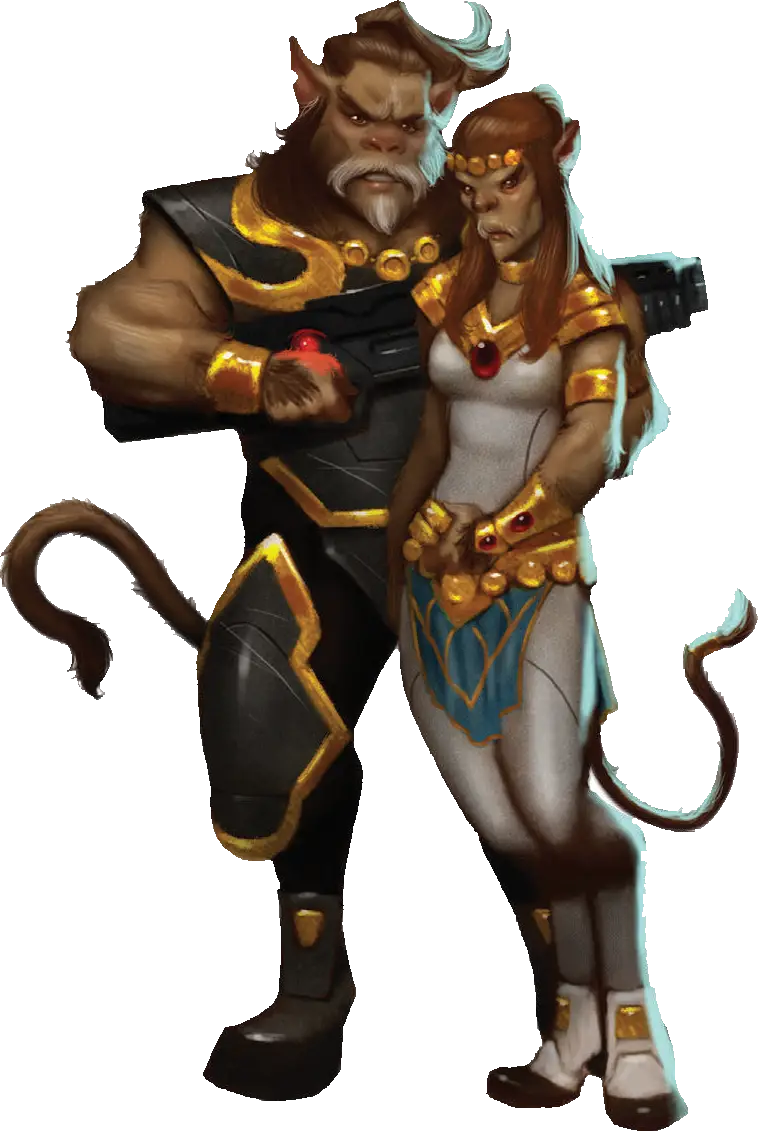
Traveller creation for Aslan follows the same procedures and concepts as described in the Traveller Core Rulebook.
Characteristics:
STR +2. DEX -2
Traits:
Aslan Travellers all possess the following traits:
Dewclaw: All Aslan have a dewclaw, which can be extended to make for a vicious close combat weapon. The dewclaw uses the Melee (natural) skill and does 1D+2 damage.
Heightened Senses: Aslan have better night vision, hearing and sense of smell than humans. All Aslan receive DM+1 to any Recon and Survival checks they have to make.
STARTING AGE
Aslan Travellers begin their careers at 18
NAMES
Travellers may wish to use Aslan names (if so, they are encouraged to pick relatively pronounceable ones!). There is no necessity for doing so, although it adds flavour and atmosphere to a campaign.
Even when names from the Aslan language are chosen, these are unlikely to be the individual’s full names, since an Aslan name is a long, sonorous and intricate structure that changes to note the background, accomplishments and life of its owner. Names for game purposes are of necessity greatly shortened.
Because the particle ko on the end of an Aslan name means himself and is used exclusively by the head of a clan, care should be taken that an Aslan name ending in ko not be chosen unless the individual is the head of a clan (usually SOC 16).
Titles
Aslan do not have titles, as such, although a high social standing may be denoted by certain portions of the individual’s name. In Aslan society, the social level characteristic denotes the relative status of both the individual and his or her family but no special titles are applied for specific social levels.
AGING
Aslan aging is slower in its onset but more severe in effects than in human Travellers. The first roll on the Aging table is not made until age 40 (after six terms of service have been completed); thereafter, it is checked every term and twice the Traveller’s number of terms served is applied as a negative DM to the roll.
ASLAN SUPPLY CATALOGE
Bwap have access to a specific Catalog of gear. CENTRAL SUPPLY CATALOG: ASLAN
ROLEPLAYING AN ASLAN
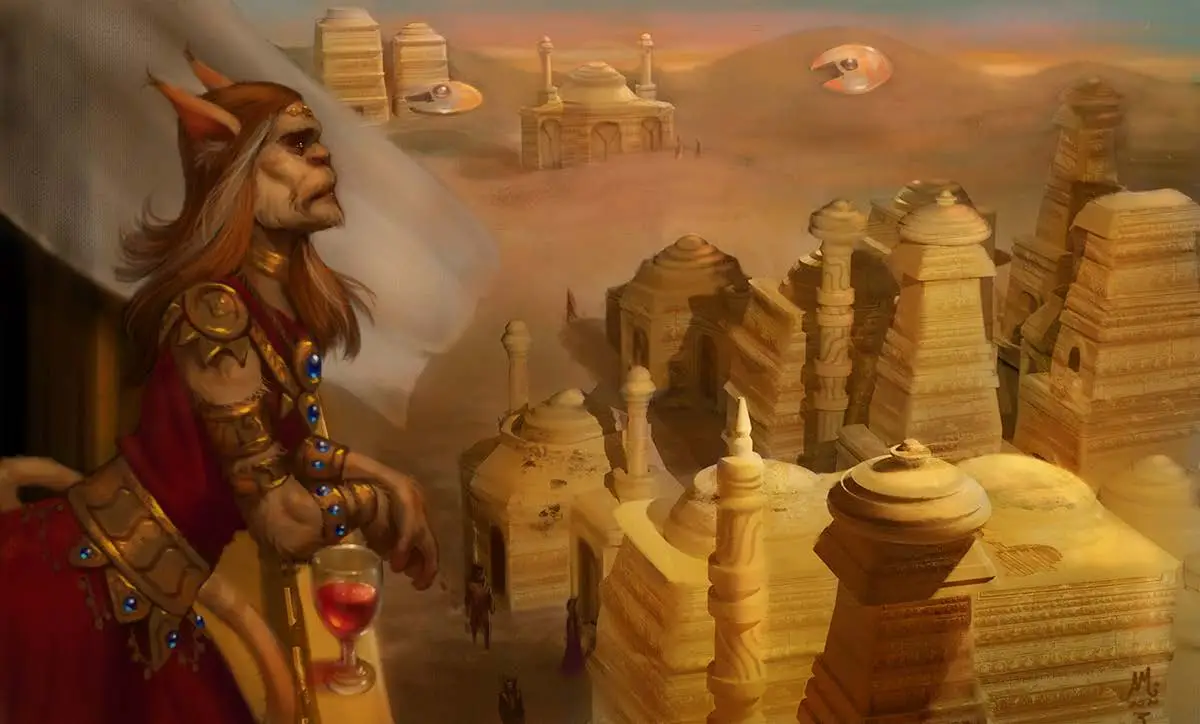
The Aslan are also bipeds, descended from carnivore chaser / pouncer stock. They are a little larger than humans at an average of 100 kg each, and have a folding "dewclaw" in each hand, originally used to dispatch prey and still used for that purpose, as well as in duels between Aslan.
Aslan society is highly gendered. Males are concerned with politics and war, and fill occupations such as pilot, gunner or soldier. However, they are not expected to really understand concepts such as money. Females are concerned with commerce, research and engineering and might run corporations, conduct scientific research or serve as starship engineers. Aslan will normally assume that humans filling a role are the "correct" gender for that role and treat them accordingly, even if it doesn't match the human's biological sex.
Aslan society is also very concerned with honourable conduct. This differs for males and females, but is defined by well-established custom – dishonourable actions include cowardice, breaking ones’ word or theft by stealth. Taking something by force may or may not be dishonourable, depending on circumstance, and things concerning money generally do not affect male honour, as they are not expected to understand it. An Aslan who has lost his or her honour is nothing, and is likely to either go into exile or even commit suicide, rather than live disgraced. Aslan who feel their honour has been insulted will generally challenge the person responsible to a duel.
Aslan society is based on extended families, and clans above that. Clans may have other clans as vassals or allies, and an alliance of the 29 most powerful clans (the Tlaukhu) forms the effective government of the Aslan Hierate.
Aslan males attach great value to owning land. While land obtained by purchase is perfectly acceptable, it is rare for an Aslan clan to sell land except in the most desperate circumstances. Thus while the eldest sons of a clan will inherit the family land, population pressure pushes any Ihatei (literally, "Second sons") either into trying to conquer their neighbours, or towards the frontier where they can find new land either by exploration or by conquering non-Aslan worlds.
Aslan borders with the Imperium are secured by treaty, but those with the Solomani are not, and the same goes for the number of small buffer states between Imperial and Aslan territory.
STR +2 | DEX -2