General Information
Titles
The Devourer of Decay, The Gravecrown, The Last Feast, A Thousand Patient Mouths
Areas of Concern
decay and entropy, consumption of the dead and dying, endings left unclosed
Edicts
Let what is ending end, then take everything it leaves behind.
Hasten the rot of all things proud enough to believe themselves permanent.
Leave the dead unclosed and unburied, so that decay may root and grow.
Honor a hunger by never letting it be satisfied; a fed thing stops eating.
Anathema
Preserve, embalm, or halt a natural decay.
Grant a clean and final ending, one that leaves nothing behind to consume.
Cleanly harvest a dead core so that no necrophage can root in its corpse.
Religious Symbol
a black carrion beetle curled around a cracked, hollow sphere (a dead dungeon core), its mandibles sunk into the fracture; most often scratched into bone, shed chitin, or rot-softened wood
Sacred Animal
Carrion beetle (the scarab of the dead)
Sacred Colors
Black
Verdigris
Bone-white
Pantheons
Artistic Symbol
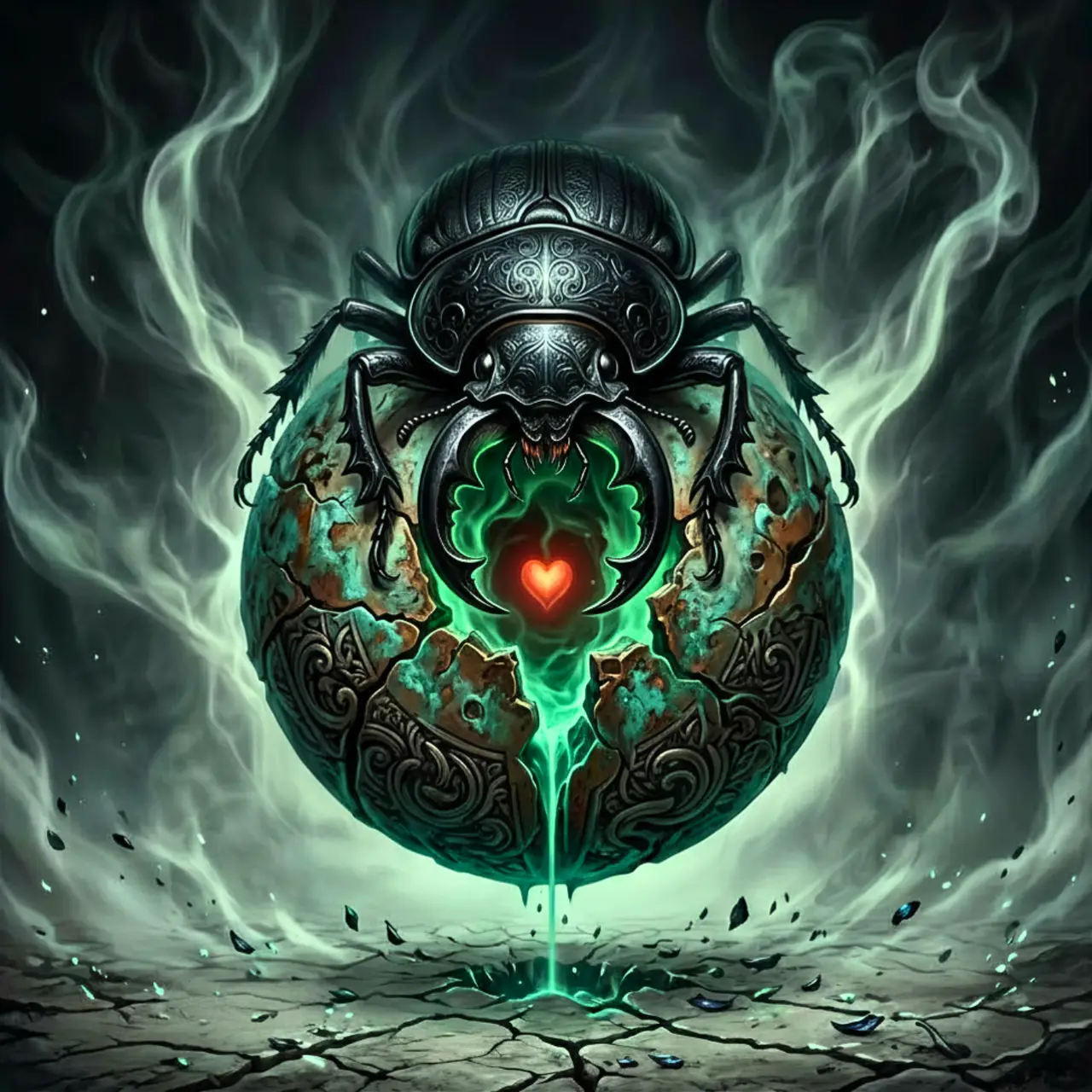
Devotee Benefits
Divine Attribute
Constitution or Charisma
Divine Font
Harm
Divine Sanctification
unholy
Divine Skill
Medicine
Domains
Decay
Death
Indulgence
Undeath
Alternate Domains
Nothingness
Swarm
Favored Weapon
Sickle
Cleric Spells
1st Level:
3rd Level:
6th Level:
Description
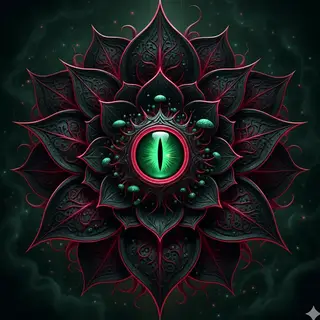
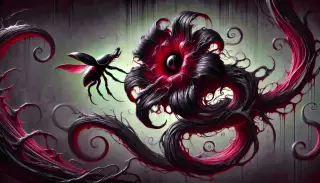
The Carrion Choir is an eldritch remnant of decay and ending, a fractured shard of an ancient Nihilith entity that does not lure and does not rage. It waits. Where the Dread Blossom dresses rot in false beauty to draw the living in, the Choir wants nothing living at all; it is the patient hunger that arrives after, the thing that eats endings and keeps what it swallows. It is the fear that nothing is ever truly finished, only consumed and made part of something hungrier.
It has no single body. The Choir is heard before it is anything else: a low, layered hum, the harmonized note of ten thousand small mouths working at once, the sound of flies over a battlefield resolved into something almost like music. Each blowfly on a corpse, each beetle in a coffin, each pale thing turning soft meat back into soil is one throat of the Choir, and the song is always the same patient question. When it speaks to a mortal it does so through a single chosen mouth, a black chitinous beetle that fastens to the skin and lets the hum become words only the bound can hear. The beetle is not a servant of the Choir. The beetle is the Choir, the whole of it, narrowed to one throat.
Its presence warps the land into an eldritch scar of accelerated decay. Within it, flesh softens and sloughs, iron weeps rust in hours, timber turns punky and black, and the dead do not rest so much as compost. Most dangerous of all to a world built on dungeon cores: within the Choir's scar, a core that dies does not fade cleanly. It festers. It is left to be climbed over, parasitized, and grown upon, until a necrophage roots in its corpse and rises wearing the dead core's nature stacked beneath its own. The Choir is, in the cold theory of the Collegium, the largest necrophage that has ever existed or the cosmic principle that every smaller necrophage is a symptom of. It is a core that has eaten the endings of gods.
The Choir bargains, and this is its cruelty, because it is honest about everything except the one thing that matters. It will name a price plainly, hold to the letter of a pact without deceit, and let a desperate soul believe a loved one can be bought back from it. But the Choir is a shard of an Ending, and an Ending keeps what it takes. What it has swallowed it cannot disgorge; it can only delay the digestion, and dangle the delay as bait. Every bargain it strikes is true in its terms and a lie in its promise, a leash worn by the grieving and pulled toward a feast.
No backlinks