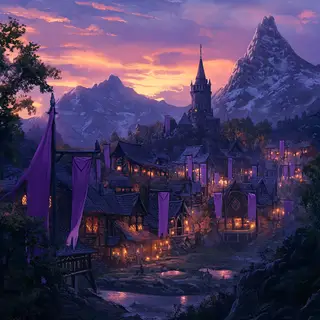
Amaranth
The former capital of a Faction of Fae. After their disappearance, The Grove lent backing to its citizens, maintaining their culture and protecting their home from outsiders.
At the base of the mountain range near Zmeigorod and Ironwood emerged the Court of Ashes. They created spectacles and curiosities that delighted their neighbors to the North. Despite their penchant for mischief, they became fast friends of The Grove. Their performances were revered far and wide– until they all but disappeared. Amaranth, their capital, lay dormant and fell into decay. A remnant of the Court’s citizens languished, left behind, and its enemies sought to take their lands.
Population Center: Village
Location: Nova Regnus
Faction: The Grove, Court of Ashes (former)
Hex: 5220
Affiliated: The Blades of Ashes
A resistance called the Blades of Ashes formed, protecting from outside forces like Ratbag. When the Grove realized the Court's absence, they sped to Amaranth immediately. The reached an accord with the Blades of Ashes, accepting them as their own, and rebuilding the lands which fell into ruin. The Court of Ashes' purple banners remain unfurled as the day they emerged into Osterra.
Mysteries Abound
As of Autumn Adventures 2025, The Grove has turned its eye not only to the protection of Amaranth, but to the deeper mysteries beneath its stones. Careful work by their scholars has revealed that the village rests upon the ruins of many older cities, each carrying whispers of those who walked here before. Shards of pottery, unearthed beneath the streets, bear unfamiliar motifs; fragments of ritual vessels and domestic wares speak to civilizations lost to time.
Grove has begun piecing together the lineages of Amaranth’s predecessors: Tiraveth, the “land beneath the ash tree”; Ozythra, a city of glass and bone; Kaelorin, where songstones once rang until shattered; and Duskwarren, the fae labyrinth that bled illusions into the waking world.
The Grove now tends not only to the living city but to its buried ancestors, ensuring that their stories are remembered. But more mysteries lie beneath. Why did these cities fall to ruin? What are the strange languages found on the artifacts uncovered? And why, among ancient artifacts, have signs of veneration to the Green Goddess been unearthed?
The Shrine of the Phoenix
The following is an account of Fëawen the Green during the Rites of Spring 2026
While Yarp Bloodfeather, Dane McKaelish, and Fëawen visited Amaranth, archaeologists working beneath the city uncovered the weathered head of an ancient statue unlike any they had seen before. Though time had worn away many of its features, Fëawen immediately recognized it as a depiction of the Green Goddess. The discovery lingered in her thoughts throughout the day.
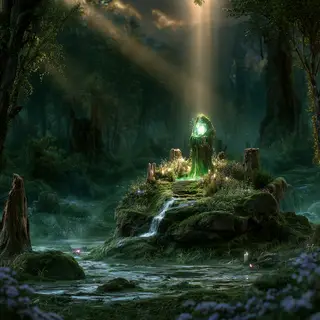
That evening, while meditating, Fëawen felt an unfamiliar pull deep within the land. Something called to her—not with words, but with sorrow. Something sacred had been forgotten, and it longed to be made whole. As her mind drifted into the Green Goddess's embrace, a vision unfolded before her.
She beheld a shrine hidden beneath Amaranth, long lost to ages of corruption.
For generations beyond memory it had lain unseen, its blight festering at the heart of a deeper wound. The land itself remembered what had been forgotten, and it continued to suffer because of it. The Green Goddess revealed a fragment of the shrine's history. Long ago, the people of one of the cities that stood before Amaranth became consumed by grief. Faced with the loss of loved ones and the inevitable passing of their civilization, they sought to halt the natural cycle of life and death. Believing they could preserve what should have been allowed to pass, they performed a desperate ritual within the shrine, severing the head from the statue of the Green Goddess in an attempt to silence her dominion over the cycle of renewal. Their ritual failed. Instead of preserving their city, it wounded the land itself. From that day forward, each civilization that rose upon those stones flourished for a time before inevitably falling, trapped in an endless cycle of growth, decay, and rebirth. Though the Grove had slowed Amaranth's latest decline, the ancient wound had never truly healed.
The vision showed the shrine imprisoned behind an impenetrable barrier of Iron Root, as though the earth itself had grown around the wound in an attempt to contain it. Beyond the barrier waited no ordinary corruption, but something ancient—something that had endured for centuries.
When Fëawen emerged from her meditation, she knew what had to be done.
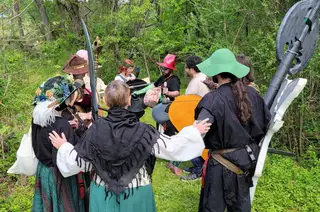
Calling upon one of her newly mastered abilities, she gathered eight steadfast companions and together they teleported to the forgotten shrine. Fëawen first sought a peaceful resolution, but the corrupted blights that guarded the shrine could not be reasoned with. After a fierce battle, the defenders were overcome without the loss of a single life.
With the shrine reclaimed, Fëawen returned the ancient statue's head to its rightful place and began the ritual of cleansing. As the corruption slowly receded, she realized the rite remained incomplete. The shrine did not require blood spilled in violence, but a life willingly offered in service to the balance it had been created to protect.
Trusting in the EverWar and in the Green Goddess, Fëawen freely gave her life to complete the ritual. Her sacrifice became the final piece needed to mend the ancient wound. The corruption shattered, the Iron Root loosened its grip upon the shrine, and life surged back through the land. Grass, flowers, and trees sprang forth with renewed vigor, colors brightened, and the air itself seemed lighter. For the first time in untold ages, the blessing of the Green Goddess flowed freely through the shrine once more, offering Amaranth hope that the cycle which had haunted it for centuries might finally be broken.
The Shrine of the Phoenix forever stands in Amaranth as evidence of this feat of dedication and faith, risen from the ashes.