❝ Fire shelters, warms, and brings us into the light. However, unchecked and left with much to burn, its hunger knows no bounds. They will insist that fire is merely a tool, but their every action mirrors it...for better or for worse. ❞
— Dalro Outrider
The Kerinya of Xeval hail from the region of the same name on the continent of Eriat far to the East. Theirs is a society of martial display and scholarly thought, which sees the nobility (Tamur¹) and clergy (Kawid Ramiza²) holding significant sway in Kerinyan-dominant societies. The terrain of the Kerinyan homeland varies immensely in altitude, but is majority mountainous, with a climate that hosts hot, dry summers and mild, wet winters. This environment has fostered a mindset of resourcefulness; making the abolute most out of nothing.
Kerinyan identity is one carefully fostered over the centuries, a fusion of two different cultures pushed into contact when their respective countries merged. Their language, a creole artificially uplifted as the language of administration and prestige, is itself an amalgamation of these two worlds. This sense of duality—two dominant estates, two heads of state in the home country, and a constant struggle between tradition and adaptation—pervades Kerinyan society.
This cannot be said for their faith. Axtar Rami³, a nontheistic religion centered on the sharing and storing of knowledge through artistry and documentation, generally fosters unity. While worshipped as a god by the Daluzewites⁴, the orthodox of the faith view fire simply as an force for change in sophont society. One that brings people together for warmth, food, story, song and dance. Ironically, duality persists in the division, and in the two-way reciprocity of the faith, but even among the scholarly some ignorance may yet persists.
Kerinyans regardless of ancestry fit generally into this mold even in the distant, former colony of Xeval. Though much of those cultural values find themselves yet again in a conflict of duality—the Kerinyan ways ferried across many oceans, and the new order being ushered in by the Orcish regime now in power.
𝐂𝐡𝐚𝐫𝐚𝐜𝐭𝐞𝐫 𝐂𝐫𝐞𝐚𝐭𝐢𝐨𝐧
Naming Conventions | ||
Male | Female | Unisex / Ambiguous |
|
| While some gender biases in naming persist from before, these distinctions are mostly leveled in Kerinyan society in the wake of the new ethnogenesis. |
Backgrounds | |
Given the rugged quality of much of the Kerinyan homeland and the custodial nature of Axtar Rami, occupations that work to assemble and preserve. | |
Common Life Paths | Typical Traits |
|
|
These are merely common archetypes observed among their people; players are free to depart from them and portray a character uniquely their own. | |
𝐀𝐧𝐜𝐞𝐬𝐭𝐫𝐚𝐥 𝐕𝐚𝐫𝐢𝐞𝐭𝐲 (Xeval)
Ancestry | Presence | Attitude |
|---|---|---|
Kalmet (Humans) | Common | Accepting |
Eituhel (Elves) | Rare | Skeptical |
Anden (Dwarves) | Uncommon | Accepting |
Common | Accepting (Conditional) | |
Claduhan (Goblins) | Uncommon | Accepting |
Istania (Tieflings) | Common | Accepting (Conditional) |
Floren (Halflings) | Uncommon | Accepting (Conditional) |
Therianids (Beastfolk) | Common | Accepting (Conditional) |
Homeland
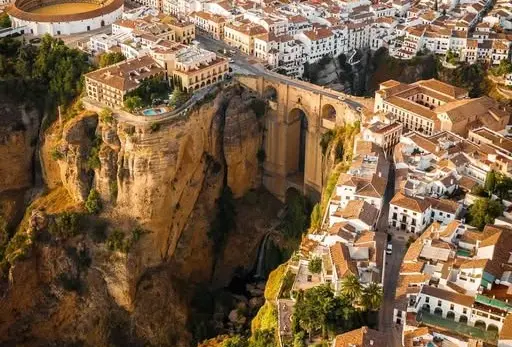
Cradled by the expansive Galis mountains in the northwest of the continent of Eriat, Kerinya is a land of extremes. Mountains recede to foothills and plateaus that drop drastically into coastal plains and valleys. Vegetation in river valleys and the lower highlands is lush, but much of the landscape consists of relatively sparse shrubland. Agriculture pervades the valleys and coasts, promoting densely populated towns and cities, while the interior is yet mostly untamed, marked periodically with rural pastoral settlements.
With mineral wealth being extracted more broadly in the past century, self sufficiency within the Haluvesan Diarchy is more widespread than ever, with the only limiting factor being more fertile ground for population growth. This pressure, coupled with a desire for Sarnevalian spices and rivalry with Tianzhou to the North has fostered a fairly robust colonization effort. Many Kerinya now call a few key Sarnevalian islands home. Even more still are now fifth generation natives of Nimoria in the city-state of Xeval.
Faith and Worldview
Axtar Rami is prevailing faith of the Kerinya. As a nontheistic religion, there are no Gods, but all Gods are acknowledged, though they do not play a role in the tradition. Worship, if it can be referred to as such, is typically centered within Krita Daluz⁶ involves the attendance of the various rites, corresponding to particular life stages. An individual considered particularly pious will diligently enscribe or have a Ramiza transcribe entries into ones Lamr Hidaya, or "Life's Work."
Every rite differs in the details of their enactment, but all conclude with the collection of ash from the hearth used, fashioning of the ash into ink with oil, and an inscription added to one's Lamr Hidaya. This diligent inscription is not limited to rites, however. Ramiza exist beyond the Krita, and serve in government and public positions, all in an effort to document all that they can, to bring back and store within Aytish⁷.
It can be said that Kerinya are generally inquisative, but are slow to adopt practices and beliefs that they document. Moreover, while literacy is fairly high compared to other groups, dissemination of information is heavily controlled by the Ramiza. This is practical in that copies are time consuming and the religion views the loss or destruction of a text to be blasphemous. It cannot be denied, however, that the Kawid Ramiza have grown accustomed to their power in recent centuries, and do withhold information even if copies exist if they feel that it undermines their authority.
𝐐𝐮𝐢𝐜𝐤 𝐑𝐞𝐟𝐞𝐫𝐞𝐧𝐜𝐞
Common Greeting: daluzet ye
Common Farewell: tibye'ya (“I'll write”)
Dress: plant-fiber and wool dominate. Common form of dress involves cotton or linen trousers, a wholecloth cotton scarf wrapped and tied invariably to form a top. Woolen over clothes are common for highland regions, or for cool and rainy days.
Body Art: Tattoos are common, but tend to be placed in particular areas of the body. Generally coincide with Axtar Rami rites.
Architecture: mud-brick structures with plaster overlay and clay tiled rooves.
Cuisine: wheat, legumes and citrus appear most often. Tunyaz and their oil are used frequently. Spices native to Eriat and Sarnevalia also heavily used.
Symbols: fire, maned vulture, Kerinyan Ibex, concentric circle
Glossary
lit. "to spear." name for the landed, warrior elite of Nefra ka Haluvesa, Xeval's former overlord. One of two ruling estates of the Diarchy.
lit. "court [of] curators"The official organization of the clergy of Axtar Rami. One of two ruling estates of the Diarchy.
lit. "words [that are] bound." The predominant faith of the Kerinya
Variation in Common of "fil'Daluz," the latter meaning poetically "the Englighted." They uphold that fire is a god, Daluzewa, and it is their responsibility to bring knowledge and understanding to the "na'Daluz" ("lightless") or "ashtilla" ("kindgling) in polite terms.
lit. "one who is binds/preserves." a name for the clergy of Axtar Rami.
lit. "circle fire" or "Ring of Fire." Began as a ring of stones meant to contain the fire, but now references the circular structure surrounding the primary hearth; the temple. Krita is often used as shorthand.
from Ayta (lit. "house") and Tish (lit. salt). The first archives were kept within the same storage chambers as salt, which seemed to prolong the lifespan of fragile mediums like paper.