
Quick Navigation
𝐕𝐈. 𝐌𝐚𝐭𝐞𝐫𝐢𝐚𝐥 𝐂𝐮𝐥𝐭𝐮𝐫𝐞 𝐚𝐧𝐝 𝐀𝐞𝐬𝐭𝐡𝐞𝐭𝐢𝐜𝐬
𝐁𝐨𝐝𝐲 𝐌𝐚𝐫𝐤𝐢𝐧𝐠𝐬
Vekarim (tattoos) are widely practiced and serve as records of lineage, milestones, and personal history. They are typically applied over time using natural pigments, with common motifs drawn from the sea, sky, and land.
Scarification is practiced by certain warrior groups and high-ranking individuals, where raised markings function as visible indicators of endurance and status.
𝐌𝐚𝐤𝐞𝐮𝐩
Makeup and body paint are produced from plant matter, animal byproducts, and crushed minerals, and are used in both daily and ceremonial contexts. Subtle dyes and scented oils are applied by all genders, while more pronounced markings are reserved for warriors and performers to indicate role, status, or ritual purpose.
Dark pigments are commonly applied around the eyes to reduce glare from sun and water.
𝐂𝐥𝐨𝐭𝐡𝐢𝐧𝐠 𝐚𝐧𝐝 𝐇𝐚𝐢𝐫
Sarnevalian clothing favors lightweight, breathable materials, including woven plant fibers, silk-like textiles, fish leather, and fur. Everyday attire commonly consists of wrapped skirts, draped tunics, and wide sashes worn by all genders, while ceremonial or elite dress incorporates layered fabrics, embroidery, and structured belts. Garments often carry patterns associated with lineage or occupation, with color palettes varying by region.
Hair practices vary widely. Longer hair is common and may be braided, bound, or decorated, while warriors sometimes adopt shaved sections or tied styles for practicality. Elders traditionally wear their hair long and loose, and children’s hair is often kept short until adolescence, when ritual grooming may mark maturity.
𝐀𝐭𝐭𝐫𝐚𝐜𝐭𝐢𝐨𝐧
Concepts of beauty in Sarnevalian culture are commonly framed in terms of balance, health, and visible care for the self. Symmetry, physical vitality, and maintained appearance are generally regarded as attractive, while personal grooming and body markings may signal status or experience.
Soft or youthful features are often described as karivai, while sharper or more imposing features may be called rahikavu. Physical appearance is noted, but long-term regard is more strongly shaped by conduct, capability, and contribution to the community.
𝐀𝐫𝐜𝐡𝐢𝐭𝐞𝐜𝐭𝐮𝐫𝐞
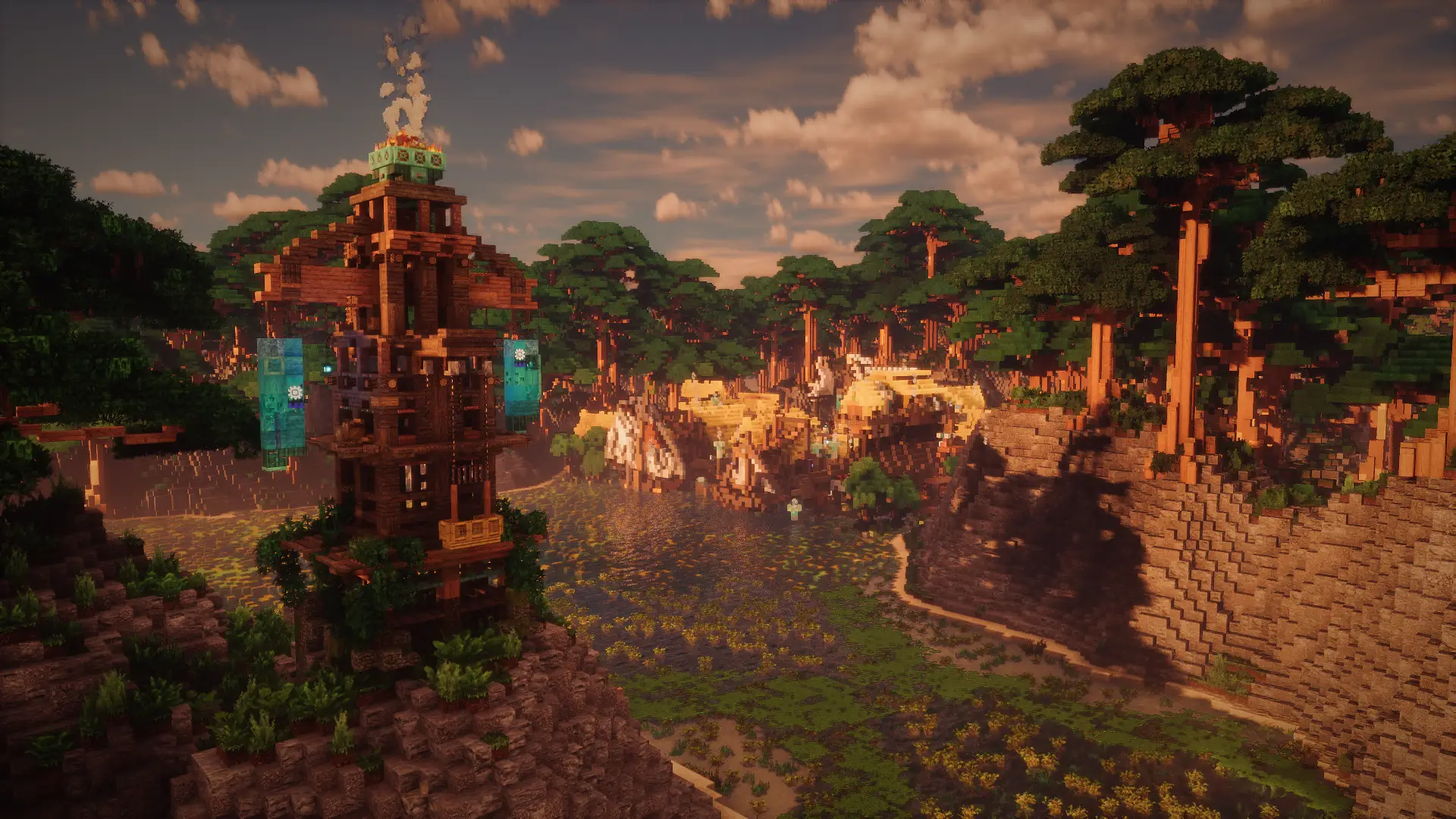
Sarnevalian architecture is adapted to coastal conditions and available materials. Homes are commonly raised on stilts for ventilation and flood management, built from wood, woven bamboo, metal supports, and palm thatch. Entire buildings are often constructed from dismantled ships, their ribs, hull planks, and keels forming curved walls and roofs. Docks and bridges connect dense waterfront clusters shaped by maritime life.
In Nevalion City, elaborate carving and mother-of-pearl inlay mark status and wealth. Port Ramu applies the same principles more modestly, relying on weathered shipwood, stilted homes, and elevated walkways that shift with the tides.
𝐀𝐫𝐭𝐬 𝐚𝐧𝐝 𝐂𝐫𝐚𝐟𝐭𝐬
Sarnevalian art is vibrant and highly detailed, characterized by flowing, organic motifs inspired by water, wind, and the natural world. Movement and rhythm are central themes, reflecting the culture’s maritime roots and spiritual connection to the environment.
Common art forms include woven textiles bearing symbolic patterns, intricately carved wooden panels, and painted ceramics used in both daily life and ritual contexts. Storytelling through dance and performance is a respected tradition, with masked rites and water-based performances serving both entertainment and religious expression.
Art permeates everyday life: tools, cooking implements, and household objects are frequently adorned with symbolic carvings or etched designs. Weapons, especially ceremonial arms are finely decorated with shell inlays, engraved metals, and ancestral markings.
Jewelry is typically crafted from gold, shells, and polished stones, often inscribed with sigils denoting lineage, status, or patron spirits. Rare and prestigious artifacts may be made from materials unique to the Sarnevalian homeland, such as silk woven from the fur of the winged water buffalo-creature, or instruments fashioned from the deep-sea trees of the underwater forests.
𝐒𝐲𝐦𝐛𝐨𝐥𝐢𝐬𝐦
Water is the central symbol in Sarnevalian culture, representing life, change, and interconnectedness.
The spiral, evoking the great spiraling waterfall appears frequently in art and architecture. Birds and fish are common motifs, symbolizing freedom and prosperity.
Motherhood is sacred, with the Dewbelles referenced throughout daily life and ceremonial practice.
The Hand of the Ocean, a stylized open palm with wave-like fingers, is widely used as a protective charm
𝐈𝐝𝐢𝐨𝐦𝐬
Sarnic: "Saranaë tarenhana to."
Common: "Saranae watch over you."
Meaning: A blessing invoking the protection of the Mother of Seas.
Sarnic: "Badashio sin' arvor."
Common: "Like a storm without rain."
Meaning: Someone who makes a lot of noise but does nothing.Sarnic: "Lo ikan ontulai lo sarnis."
Common: "A fish chasing the tide."
Meaning: Someone pursuing something futile or beyond their reach.Sarnic: "Cavalion sin' amorro."
Common: "A house with no hearth."
Meaning: A place without warmth, love, or belonging.
𝐋𝐢𝐭𝐞𝐫𝐚𝐭𝐮𝐫𝐞 𝐚𝐧𝐝 𝐒𝐭𝐨𝐫𝐢𝐞𝐬
Sarnevalian literature is rooted in strong oral traditions, with epic poems, sung histories, and mythic fables forming the foundation of their storytelling heritage. These narratives often explore fate, the balance between land and sea, and the guiding presence of the Tidemother.
Written works exist mainly as etched bamboo scrolls or cloth-bound scripts, typically reserved for religious texts, navigational lore, and historical records. Despite this, performative storytelling through dance, song, and shadow plays is held in equal, if not greater, esteem than the written word, as it is believed to keep stories alive through communal memory and living motion.
𝐌𝐮𝐬𝐢𝐜
Sarnevalian music is highly rhythmic and percussive, featuring drums, gongs, bamboo flutes, and stringed instruments. Unique water-based instruments such as echoing shells and water drums played on pools are distinctive to their culture. Singing is often polyphonic, with layered harmonies that mirror the movement of waves. Music permeates daily life and ceremonies alike, with some songs believed to invoke the favor of the Dewbelles.
𝐅𝐨𝐨𝐝
Sarnevalian cuisine centers on seafood, tropical fruits, and fragrant red rice as staples. A distinctive honey-dairy made from the milk of winged water buffalo is used in both savory and sweet dishes. Common cooking methods include grilling, pit-roasting, and steaming in banana leaves, with popular foods such as spiced seafood stews, coconut curries, and fermented specialties. Communal meals and large feasts are central to social and religious life.
𝐂𝐚𝐥𝐞𝐧𝐝𝐚𝐫 𝐚𝐧𝐝 𝐓𝐢𝐦𝐞𝐤𝐞𝐞𝐩𝐢𝐧𝐠
Before the Tianren Occupation, Sarnevalians used a lunar–tide calendar, dividing the year into 13 moons of ~28 days each. Months were named for sea conditions or festivals, and days were marked by tide phases such as first tide (dawn), high tide (midday), falling tide (dusk), and deep tide (midnight).
Today, including in Port Ramu, Sarnevalians follow the 24-hour system and the Sarneishin Trade Calendar, which has surprisingly become the standard time system for a considerable population of Nimoria.